AASCU on the Hill
Join AASCU for an in-person Hill Day and make your voice heard in the halls of Congress. Your institution’s voice can help shift the needle on key federal policy priorities for regional public universities (RPUs).
Contact us.
Meet in person with your federal delegation.
The start of the second session of the 119th Congress in 2026 provides a renewed and timely opportunity to engage with the members of your federal delegation after a tumultuous 2025. AASCU invites all its members and leaders at regional public universities (RPUs) to attend the Washington, DC, event on March 24-25 to promote the successes of the sector and its positive social and economic impacts on their surrounding communities.
Members of Congress need to hear from you directly to help them better understand this cohort of institutions and the significant effects the loss of previously dependable national investments in higher education will have on student success and university goals. Specifically, it is crucial that you share how institutional achievement is directly correlated with student success and regional social and economic prosperity.
AASCU is accentuating this call to protect federal institutional and student support programs, including Pell Grants, Postsecondary Student Success Grants, Minority-Serving Institutions Grants, TRIO and GEAR-UP, and the Augustus F. Hawkins Centers of Excellence Grants. The 2026 AASCU on the Hill provides you with such an opportunity.
What can advocates expect on March 24–25, 2026?
Join your friends and peers from across the country for the 2026 AASCU on the Hill and have an impact on the development of the following important federal policy issues:
- Preserving federal funding for student financial aid and institutional assistance
- The development and implementation of accountability provisions in H.R. 1
- Preserving the authority to fund Minority-Serving Institutions
- Show Congress the unique impact and the crucial role regional public universities play
Share your expertise and unique insights to help educate your federal delegation on the complexities of modern higher education institutions, the composition of today’s students, and the innovative approaches, recommendations, and challenges in advancing your organization’s mission.
Who should attend?
- Presidents and chancellors
- System presidents and chancellors
- Government relations/public affairs staff
- A member of the president’s/chancellor’s cabinet
- Student government or association presidents, invited by campus leadership
Benefits of participation?
- Meet directly with the offices of your senators and representatives
- Get briefed on the latest news and actions on Capitol Hill
- Utilize practical materials, trainings, and resources for meeting talking points, suggestions, and advocacy best practices
- Network and connect with other AASCU presidents/chancellors and share knowledge and best practices
Schedule at a glance
Sessions will be held at AASCU’s office, located at 1350 Eye Street NW, Washington, DC.
On Wednesday, March 25, participants will make their own transportation arrangements to the Capitol.
| 11:30 a.m.–12:15 p.m. | Lunch
Lunch will provide attendees with an opportunity for an informal and private facilitated conversation about what is on the membership’s mind regarding policy developments and activity on and off Capitol Hill. |
| 12:15–1:15 p.m. | Washington Policy Update This session will provide a policy overview of current developments in the 119th Congress and within the Administration, as well as what to expect when meeting with the members of your delegation.
|
| 1:15–1:30 p.m. | Welcome and Introductions
President Chuck Welch will level-set the various event sessions, share an overview of AASCU’s advocacy work on behalf of the membership, and discuss what policy expectations remain from the administration.
|
| 1:30–1:45 p.m. | Break |
| 1:45–2:30 p.m. | Is Your Institution Ready for New Accountability Provisions?
The passage of HR1 (OB3) introduced significant changes to the Higher Education Act, particularly on institutional accountability. For the first time, colleges and universities will be subject to an earnings test of their graduates to maintain program-by-program eligibility for federal student loans. The speakers for this session will highlight the deliberations and expected regulatory structure of the new accountability provision, as well as the implementation of the new Workforce Pell Grants.
|
| 2:30–3:15 p.m. | All Rise: Legal Cases and Actions Affecting Higher Education
From executive orders to interagency agreements, every administration action seems to wind up on a judicial docket. Join our panelists as they break down the present status of court actions directly affecting higher education. After discussing top cases and their potential impact on future policy, panelists will invite attendees to confer in small groups before reconvening to answer questions and provide a potential map for the remainder of 2026’s legal landscape. |
| 3:15–3:30 p.m. | Break |
| 3:30–4:30 p.m. | Measuring What Matters: Data Availability, Transparency, and Federal Capacity
Reliable data underpins effective higher education policy. This session explores how recent reductions in federal data capacity are reshaping the postsecondary data landscape. The session will highlight how public institutions are navigating growing data gaps and reporting uncertainty. Attendees will engage in a brief collaborative reflection before transitioning to a panel of higher education data experts to discuss long-term implications for transparency, accountability, and policymaking. |
| 4:30-5:30 p.m. | NegReg: The Good, the Bad, and the Consensus
Last year’s negotiated rulemaking produced several noteworthy changes as the administration sought to implement provisions included in H.R. 1 – the One Big Beautiful Bill Act. Hear from those who were in the room as they share the intricacies of the new Workforce Pell program, application of student loan caps, and explain the “consensus” that was reached that led to a fixed definition of professional degree programs. |
| 5:30-7 p.m. | Reception
The reception will take place at the new AASCU Offices located at 1350 Eye Street, NW, Suite 810, Washington, DC. |
| 8–9:30 a.m. | Early Bird Gets the Earmark: A Breakfast Briefing on FY27 Strategy Join your AASCU colleagues for a casual but timely breakfast discussion on congressional earmarks and what the latest trends mean for your campus. With FY26 earmark funding for RPUs more than doubling since FY24, and an election year shaping the landscape, FY27 presents a critical window to elevate your institution’s priorities on Capitol Hill.During this session, we’ll walk through our new FY26 earmark dashboard, highlight which agencies and accounts saw the most success, and share practical tips to strengthen your submissions. Come ready to learn, ask questions, and exchange ideas with peers— with deadlines around the corner, this is a prime opportunity to sharpen your strategy before heading into your Hill meetings. |
| 10 a.m.–5 p.m. | Capitol Hill Meetings |
Confirmed Speakers
Steven
Bloom
Assistant Vice President of Government Relations
American Council on Education

Bryan
Cook
Director of Higher Education Policy
Urban Institute

Preston
Cooper
Senior Fellow
American Enterprise Institute
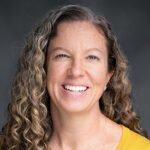
Erin
Dunlop Velez
Vice President of Research
Institute for Higher Education Policy (IHEP)

Maddy
Gitomer
Senior Counsel
Democracy Forward
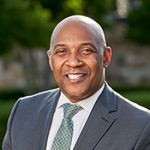
Bennie L.
Harris
Chancellor
University of South Carolina Upstate

Alexander
Holt
Senior Advisor for Higher Education
Committee for a Responsible Federal Budget

Kristin
Hultquist
CEO and Founding Partner
HCM Strategists

Kapil
Longani
Senior Vice Chancellor for Legal Affairs and General Counsel
SUNY System Administration
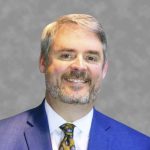
Luis
Maldonado
Vice President of Government Relations and Policy Analysis
AASCU
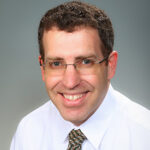
Sean
Simone
Vice President of Research, Director of the Pell Institute
Council for Opportunity in Education

Randall
Stamper
Assistant Vice Chancellor, Career Pathways and Workforce Programs
Virginia Community College System

Rachael
Stephens Parker
Executive Director
Governor’s Workforce Development Board
John Patrick
Walsh
Assistant Vice President for Federal Relations
AASCU

Charles L.
Welch
President and CEO
AASCU

Kiersten
Wills
Government Relations Policy Manager
AASCU
Hill Meetings
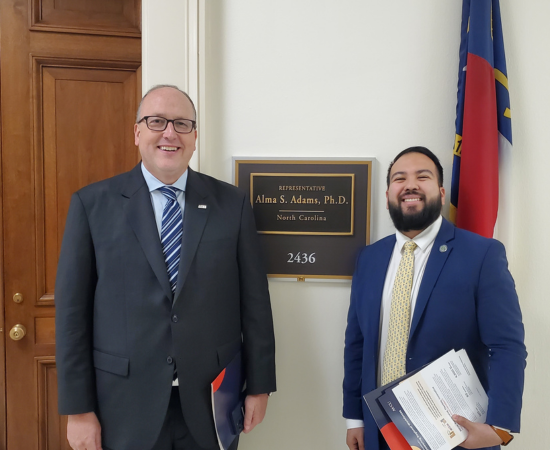
Hill Meeting Scheduling: Attendees are responsible for scheduling meetings with their congressional delegation: one member of the U.S. House of Representatives and both U.S. Senate offices. Meetings should preferably be scheduled between 10 am – 5 pm on Wednesday, Mar.25. For those attendees requiring assistance, AASCU Government Relations staff stand ready to assist with any scheduling needs.
*Reminder*
Most meetings in Capitol Hill offices are scheduled for only 20-25 minutes. AASCU recommends asking for a meeting with your elected official AND their legislative assistant covering higher education policy issues. Attendees should determine the necessary travel time between meeting locations and take that into account when scheduling meetings between both sides of Capitol Hill. We recommend, at least 30 minutes to get from the House to the Senate or vice-versa.”
Please reach out to AASCU Government Relations staff if you require assistance in scheduling any meetings. We encourage you to share any time constraints, additional requests, or previously scheduled meetings you may have via email. You can contact our team at govrel@aascu.org.
Testimonials
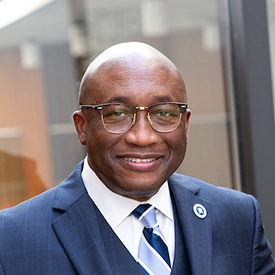
“AASCU institutions embody thousands of powerful stories that demonstrate how their work transforms lives and strengthens the socioeconomic fabric of our nation. These stories deserve to be shared with leaders who shape priorities for funding. AASCU on the Hill provides an invaluable platform to share these stories and showcase the profound impact of our institutions. Therefore, I am honored to participate in this effort and to highlight the role of the State University of New York at Fredonia in advancing social mobility and preparing students to enrich our nation.”
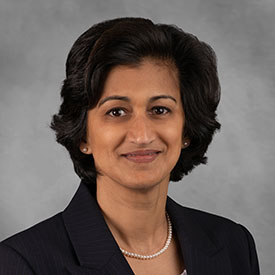
“Bringing my student leader to AASCU on the Hill was highly impactful. He clearly conveyed student needs and priorities to our elected representatives and their staff, and he carried the authority to speak on behalf of students. He also gained a greater understanding of how federal legislation affects students, which benefits his ability to advocate for our students on campus and beyond.”
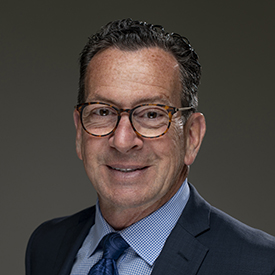
“AASCU on the Hill provides an essential forum for developing and advancing the shared priorities of public universities, as well as the students and states we serve. Engaging directly with federal policymakers and colleagues from across the country has never been more important, as together we reinforce the importance of expanding affordable access, aligning education with workforce needs, and supporting student success and economic mobility. AASCU’s leadership in Washington, along with our participation in events like AASCU on the Hill, ensures that our public institutions — and the communities we educate and support — have a strong and effective voice.”
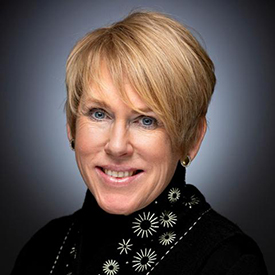
“AASCU on the Hill is a well-organized event that provides attendees with critical information and access to experts to inform advocacy efforts at both the federal and state levels. The experience is beneficial to the immediate conversations that occur during the event in Washington, D.C., as well as to planning and advocacy work upon attendees’ return to their campuses. The event provides a beneficial opportunity to network with AASCU members and staff, which, when combined with the array of AASCU resources and professional expertise available to members, demonstrates the value of a national organization committed to the success of regional public universities.”
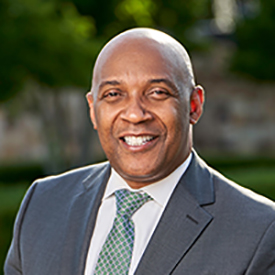
“AASCU on the Hill is one of the most impactful advocacy experiences I’ve had as a university leader. The 2025 event provided a powerful platform to engage with policymakers while learning from experienced and strategic leaders how to amplify messages to our legislators on the issues directly impacting our institutions. In a time when higher education faces rapid change at both the federal and state levels, AASCU’s advocacy equips us to navigate that landscape with clarity and a collective voice for our students and communities.”
Join us in March and make your voice heard.
| Attendee type | Early Bird Rate (ends Jan. 16) |
Regular Rate |
|---|---|---|
| Member Presidents, Chancellors, Government Relations staff, Cabinet members |
$250 | $350 |
| Nonmember Presidents, Chancellors, Government Relations staff, Cabinet members |
$500 | $700 |
| Students | Complimentary | Complimentary |
Non-Refundable Registration Fees
Should your travel plans change, please be advised that all registration fees for the meeting are non-refundable.
Accommodations

Viceroy Washington DC
1430 Rhode Island Ave., NW
Washington, DC 20005
The AASCU room block is sold out. Guests may be able to secure a room, but at a higher rate.
Nearby Hotels
Sofitel Lafayette Square Hotel
806 15th Street NW
Hilton Garden Inn Washington DC Downtown
815 14TH Street NW
Hamilton Hotel
1001 14th Street NW
Eaton Hotel
1201 K Street NW
Washington Marriott at Metro Center
775 12th Street NW
JW Marriott Washington DC
1331 Pennsylvania Ave NW
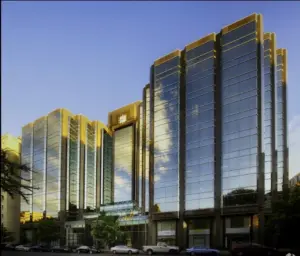
Meeting location
Sessions will be held at AASCU’s office, located at 1350 Eye Street NW, Washington, DC.
On Wednesday, participants will make their own transportation arrangements to the Capitol.
AASCU on the Hill Partner

Have questions about AASCU on the Hill 2026? Let us know.
"*" indicates required fields
