Op-Ed: The Presidency and the Public Promise
L. Jay Lemons, Ph.D., President of Academic Search
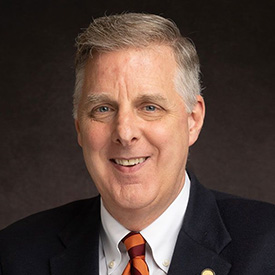
AASCU turns 65 this year, coinciding with Academic Search’s 50th anniversary. I have known the people leading AASCU since long before I came to Academic Search, from Allan Ostar and Jim Appleberry to Deno Curris, Muriel Howard, Millie García, and now Chuck Welch. Each has shaped my understanding of AASCU, deepened my belief in the mission of our institutions, and given counsel and support to numerous presidents, myself included.
Having known these leaders and worked with AASCU over the years, I find this anniversary brings a question into focus: What has changed about the presidency over time, and what has stayed the same?
I come to these questions first as someone who has led a public university, and now from a different vantage point at Academic Search, where I work with boards and presidents at moments of transition. Two efforts have widened that view in recent years: the “Competencies for the College Presidency” study, commissioned in partnership with AASCU, and my podcast, Leaders on Leadership, where I hear presidents describe their experiences in this work.
What Has Endured
Purpose
AASCU presidencies have long focused on access, and the leaders I interview return to it often. Nearly half of the 60 leaders on my podcast spoke about first-generation identity and access, often from personal experience. For example, AASCU’s current president, Chuck Welch, is one of them. When we spoke, he told me how his parents, neither of whom had the opportunity to attend college, made it a priority for him. An advisor later helped him see that the work he had found most meaningful as a student—helping other students succeed—could become his life’s work. His story shows how opportunity changes what a family can imagine, and how graduates carry what they have learned into the communities they serve. That is the public value AASCU presidents have always been called on to explain and protect.
I heard a similar story from Millie García, former AASCU president and now chancellor of the California State University system. Her family’s influence, together with what she saw higher education make possible, became her North Star. “It’s about knowing who you are and why you decide to be a leader in whatever institution you feel you match,” she told me. ”It’s about loving that mission and that institution so dearly.”
A president’s North Star is personal, but it points toward an institutional mission, and that mission is inseparable from the communities these institutions serve. Consider a president whose college sits in a rural region where the population has declined, and prospective students have moved toward larger cities. Enrollment may come under pressure even as the college’s importance to the surrounding community grows. I think of Chadron State College in Nebraska, which was my family’s gateway to higher education, and the regional universities of Pennsylvania, including Commonwealth University in Lock Haven and Mansfield, where I lived for the past 25 years. When such a college struggles, the community has more at stake than the loss of a campus employer, and its president feels that in every decision.
The picture looks a little different in our cities and metropolitan areas, but the stakes are the same. Cal State LA, in the nation’s second-largest city, and Sam Houston State University, on the edge of the Houston metroplex, are helping drive thriving regional economies, opening doors for students and preparing the graduates that local employers, schools, and hospitals depend on. Whether in a rural county or a major metropolitan area, presidents must help students succeed today while securing the institution’s ability to serve the next generation. That is a responsibility shared by many college leaders, but it is especially visible for presidents at regional public universities.
Skills
The skills this work requires have proven remarkably constant in my experience. Trust, judgment, communication, and the ability to bring people into difficult decisions mattered when I began my career, and they matter now. The “Competencies” study, which surveyed more than 700 presidents, puts trust at the top of today’s list: 96% rated being trustworthy, consistent, and accountable as very relevant. Humility also surfaced repeatedly in presidents’ own words in the study, and I hear the same sentiment echoed in my podcast conversations, where guests describe hiring colleagues whose expertise differs from their own, listening when those colleagues disagree, and knowing when to ask for help.
Public Good
The public dimension of the work has proven just as constant. From the beginning, our institutions have opened the doors of higher education more widely, and they do so by design, preparing students to become consequential citizen leaders. Each year, AASCU’s celebration of its distinguished alumni offers a reminder of what that purpose produces: graduates who return to their communities as teachers, nurses, business executives, public servants, and civic and community leaders. Presidents are the stewards of that promise. We exist to serve the public good and to help make what Thomas Jefferson called “the American experiment in democracy” work. Let us never forget!
What Has Changed
Communication and Speed
One of the important findings of the “Competencies” study is around the critical need for presidents to be “savvy communicators.” While the ability to communicate effectively and persuasively has always been important to leadership, the advances in technology of the past 25 years have had a dramatic impact on presidential communication.
In the 1990s, mail bags arrived in presidents’ offices once or twice a day. The advent of email enabled unfiltered mail to reach leaders 24/7 in an unrelenting way. The rise of social media over the past twenty years has only increased the speed of communications and created a proliferation of ways news finds its way to key constituencies. It is hard to overstate this change and the need for expedited decision-making by presidents and their teams. Presidents are asked to respond to concerns almost as soon as they arise, while the consequences of their decisions reach audiences far beyond campus. Consultation remains essential, but the time for it has shrunk even as the number of relationships a president must tend has grown.
Data Acumen and Resource Management
The “Competencies” study also highlighted the need for the 21st-century president to be fluent with data and capable of analyzing and synthesizing it in every dimension of leadership. All presidents must find ways, through their own personal skills or through their executive teams, to use data to monitor, guide, and plan for their institutions.
Presidents dating back to the founding of the colonial colleges have had financial responsibilities and concerns. Yet the days of Mark Hopkins on one end of a log and a student on the other end are quaint to imagine. Today’s presidents have never-ending demands upon their time, often driven by the need to sustain and develop the resources needed to fulfill the mission of their institutions.
I deeply admire those colleagues who find ways of engaging in teaching and research, but the demands for external engagement have never been greater. The need for managing and stewarding resources is a constant juggling act, and the demand and call for presidents to build partnerships beyond the campus with corporations, governmental entities, foundations, and donors is work that adds to the intensity and complexity of the modern presidency. Not all of that is completely new, but the volume and expectations for extramural work have never been higher.
Public Trust
From the very beginning of higher education in this country, there have been people who questioned its value or believed it to be the province of the privileged. Public trust has waxed and waned across the decades, and the turmoil of the 1960s brought deep skepticism that our predecessors had to lead through. Today, the “2026 Lumina Foundation–Gallup Confidence in Higher Education” survey finds that 38%of Americans have a great deal or quite a lot of confidence in higher education, down from 57%in 2015. Add the divisiveness of the political environment and decades of declining public investment, and the presidency is more challenging than at any time since the 1960s or the 1950s in the era of McCarthyism or the 1930s and 1940s with the Great Depression and World War II, but know that great leaders have found ways across time to meet the challenges of the day.
Where We Stand Today
My broad assessment is that while the conditions of the presidency have changed dramatically as outlined above, many of the core competencies have remained remarkably constant. The increased intensity of the job has no doubt contributed to the shortened average tenure for presidents. That trend is one I hope we can all work together to find ways to reverse. Leadership matters more today, perhaps as much as at any time in our history. We need to find ways to support leaders in developing the resilience needed to survive the crucible, as leading sustainable change requires continuity of leadership.
For all its demands, the presidency remains a calling filled with meaning and joy. An unexpected conversation with a student can remind you why a difficult decision mattered, and a community partner can help an institution do something it could not have done alone. Those moments do not erase the pressures of the job. They are part of what makes the work worth doing.
Sixty-five years into AASCU’s history, its presidents face demands that their predecessors could scarcely have imagined. They are also entrusted with a purpose their predecessors would recognize immediately. The task before us is to sustain both the leaders and the institutions that make access and student success real.
AASCU presidents have never done this work alone, and they should not be expected to now. We need one another, and AASCU is always there to help develop, guide, and support its presidents and other leaders. On this anniversary, my thanks go to every president carrying this work forward today and to the members of their teams. The promise of the American experiment in democracy matters more than ever.
I hope this is a conversation we get to continue at this year’s Annual Conference, where we will come together to have our hearts, minds, and souls replenished to further our resolve and strengthen our contributions to delivering America’s promise to the current and future generations we serve.
