 AASCU Edge
Reaching for the Stars: An Astronaut’s Perspective on the Power of Higher Education
Achievement begins with opportunity.
Achievement begins with opportunity. For NASA Astronaut Emeritus Victor J. Glover Jr., that opportunity came through a teacher who recognized his potential, an institution that helped him develop it, and mentors who encouraged him to imagine a future he had not yet considered possible.
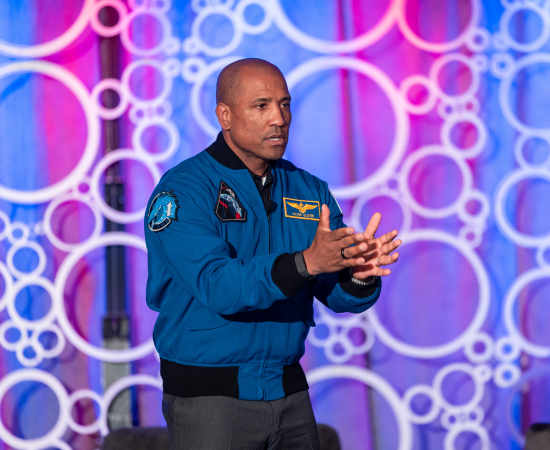
Speaking at the opening keynote of AASCU’s 2026 Annual Conference for Presidents and Chancellors in Savannah, GA, Glover challenged higher education leaders to consider the influence they have on the lives and futures of their students. His central message: Achievement begins with opportunity, and universities have a responsibility to help people recognize and reach their potential.
The Power of Someone Believing in You
Glover’s own experience illustrates how one person’s belief in a student’s potential can make a lasting difference. Growing up amid financial hardship and housing instability, he moved frequently and learned to adapt to new circumstances. Although he enjoyed mathematics, describing the way numbers “spoke” to him, he wasn’t convinced he could succeed in the classroom.
That changed when a teacher recognized his aptitude for math and told him that, with hard work, he could become a great engineer. Glover didn’t even know what an engineer was, but the teacher’s words introduced him to a possibility he had never considered.
He carried that encouragement with him to California Polytechnic State University, San Luis Obispo, where he studied mechanical engineering. He credits Cal Poly with providing the foundation for his career, describing the university as his launchpad and his subsequent Navy experience as the rocket booster.
His connection to Cal Poly remains strong. He and his wife and oldest daughter are graduates, and their three younger daughters are currently enrolled in the California State University system.
For Glover, the lesson is bigger than his own story. Students may arrive at college with talent and potential but without the confidence or support to recognize what they can accomplish. Higher education can help close that gap by providing access, encouragement, mentorship, and opportunities to discover new possibilities.
He recalled mentoring local students while attending Cal Poly, beginning when he was just 19. The experience reinforced the value of representation and the importance of helping young people see themselves in places and professions they may not have imagined pursuing.
The power of opportunity and mentorship, he emphasized, is clear. When the two come together, they can change the trajectory of a life.
An Education That Opens New Horizons
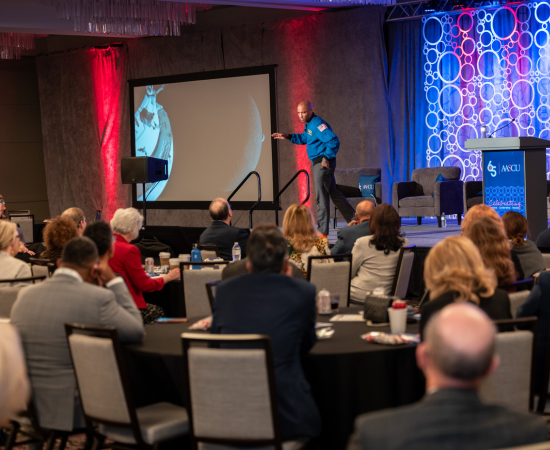
Glover encouraged university leaders to think broadly about what their institutions are preparing students to do. Higher education should not simply equip students with the skills to enter a profession; it should help them become critical thinkers and engaged citizens who can contribute meaningfully to society.
His own career—from engineering and military service to spaceflight—demonstrates the value of an education that prepares people to adapt, solve problems, and approach unfamiliar challenges.
Looking at Earth from orbit, Glover said, physical borders and the divisions that often shape human interactions are nowhere to be seen. From that distance, the planet appears as “water and dirt,” without the boundaries people have created.
Glover’s reflections offered a reminder that education should expand how students see the world, helping them move beyond familiar perspectives and better understand their place in it.
Leadership Begins With Belief in Others
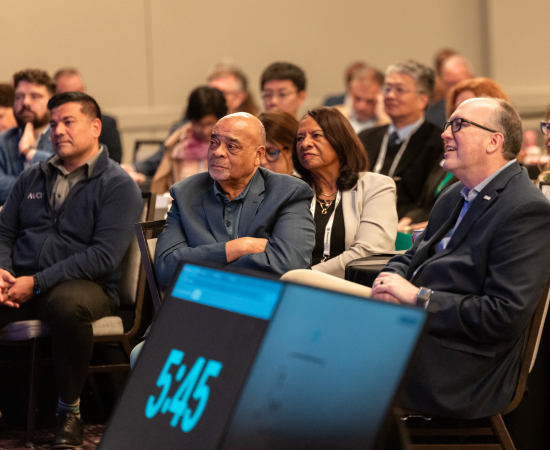
During the question-and-answer session, Glover shared a leadership lesson particularly relevant to the presidents and chancellors in attendance: Leaders need to be both coaches and cheerleaders.
Expectations, accountability, and constructive feedback are important, but people also need encouragement. As Glover explained, leaders can only coach effectively when they are also cheering people on. That balance begins with recognizing the potential in others, including when they may not yet recognize it themselves.
Glover also acknowledged the people who supported him throughout his career, particularly his wife, describing their connection through the concept of quantum entanglement. Even when separated by the demands of his work, he felt her continued investment in his journey. His reflection underscored that individual achievement is often made possible by the support and commitment of others.
Championing Humanity, One Student at a Time
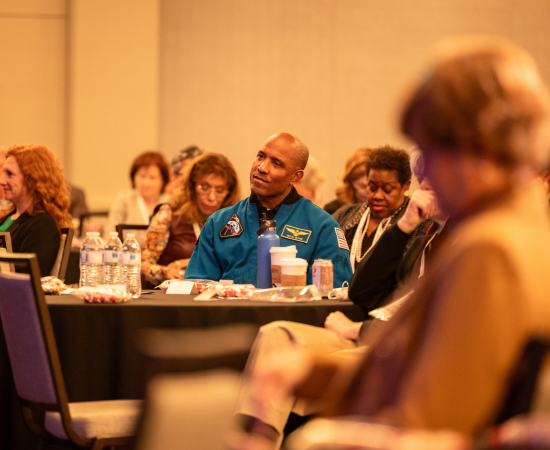
Glover cautioned against allowing familiarity to breed indifference. For university leaders, the daily demands of leading an institution can sometimes make it easy to overlook the significance of what happens on their campuses and the opportunities they create for students.
But consider what those opportunities can mean: A student who never imagined becoming an engineer discovers a talent for mathematics because a teacher takes the time to recognize it. A student finds a path to a college degree, a meaningful career, and new possibilities while remaining connected to the community that helped shape them. A mentor’s encouragement gives someone the confidence to pursue something they once thought was beyond their reach.
These aren’t incidental outcomes of higher education. They are its most consequential work. Ultimately, Glover reminded the audience, the most amazing technology is humanity itself. And universities are in the business of developing it.
At the conclusion of the session, AASCU President and CEO Chuck Welch observed that a regional public university (RPU) had taken Glover farther than any human had ever traveled.
It was more than a fitting observation about one astronaut’s remarkable journey. It was a reminder of what higher education, and its leaders, make possible every day, often in ways that extend far beyond what anyone could have imagined when a student first walks onto campus.
That is the work of RPUs: creating the conditions for students to discover their potential, providing the support to help them pursue it, and opening doors to futures they may never have imagined. And as Glover reminded the presidents and chancellors gathered in Savannah, that work reaches far beyond the campus, the classroom, or even the Earth itself.
Want more posts from AASCU Edge?
Questions about AASCU’s leadership development? Let us know.
"*" indicates required fields
