Engaged Civic Learning and Economic Mobility Project
This faculty and staff cohort supports redesigning community-based courses to align civic learning with economic mobility goals. Participants work with peers and experts to strengthen student success, deepen community partnerships, and put research into action.
Contact us.
Do your courses ask students to learn with and from communities?
If you partner with community organizations to support students’ civic voice or design learning experiences that connect students and families to educational and economic opportunity, this cohort invites you to deepen that work and strengthen its connection to economic mobility.
AASCU, in partnership with Public Agenda, invites faculty and staff from member institutions to apply to participate in a cohort of instructors who will redesign existing community-based learning courses to integrate economic mobility goals and frameworks.
Public Agenda is a research-to-action organization dedicated to building a strong and healthy democracy. In their recent research on how institutions of higher education contribute to positive economic mobility for students from low-income backgrounds, Public Agenda finds that community-based courses and programs can be powerful tools for supporting the recruitment and retention of low-income students when they are explicitly aligned with economic mobility goals. Their research also suggests that public four-year institutions that enroll large numbers of low-income students from the local community could be central to systemic efforts to improve mobility, because graduates from these institutions often remain in the community, contributing to the economy and civic life.
This partnership between AASCU and Public Agenda puts these research findings into action. Cohort participants will work directly with peers and experts to redesign current community-based courses to align with strategies for positive economic mobility outcomes.

2026 Cohort Participants
Faculty and staff who teach community-engaged courses at:
- California State University Channel Islands
- California State University, Sacramento
- California State University, San Bernardino
- Missouri State University
- Salisbury University (MD)
- University of Hawaiʻi at Hilo
- University of North Carolina at Pembroke
- University of Texas Rio Grande Valley
- University of Washington Bothell
Benefits of participation:
- Access to Public Agenda’s economic mobility research insights and toolkit
- Collaborative curriculum development support from nationally recognized experts in the field
- Participation in a cross-institutional faculty learning community of peers that shapes national practice
- $3,000 to support faculty time, project activities, and required travel
2026 Cohort

Raissa
DeSmet
Associate Teaching Professor
University of Washington Bothell
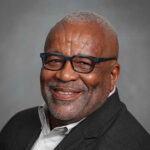
Lyle
Foster
Associate Professor, Sociology, Anthropology and Gerontology
Missouri State University

Gabrielle
Gonzales
Assistant Professor, Sociology Department
California State University Sacramento

Paul
Jorgensen
Associate Professor, School of Interdisciplinary Programs and Community Engagement
The University of Texas Rio Grande Valley

Xiangyu
Li
Assistant Professor, Computer Science and Engineering
California State University, San Bernardino

Michelle
Lorimer
Assistant Professor, History
California State University, San Bernardino

Yanria
Madrigal-Garcia
Assistant Professor, College of Education
California State University Sacramento

Christina
Marrero
Faculty Lecturer in College of Education
The University of Texas Rio Grande Valley

Leticia
Nevárez Zavala
University Lecturer
The University of Texas Rio Grande Valley

Sandy
Pope
Associate Professor, Education; Director, Institute for Public Affairs and Civic Engagement
Salisbury University (MD)

Carla
Rokes
Chair, Art Department
University of North Carolina at Pembroke

Assadullah
Sadiq
Assistant Professor of Education, Early Childhood Studies
California State University Channel Islands

Olga
Sideleva
Biology Lecturer
University of Hawai’i at Hilo

Suyang
Wang
Assistant Professor, Computer Science and Engineering
California State University, San Bernardino

Xuan
Xie
Assistant Professor of Marketing
University of Hawai’i at Hilo
What to Expect
Participating instructors will commit to:
- Attend a project kickoff and training on March 16 at AASCU’s American Democracy Project conference in Chicago
- Attend three subsequent virtual convenings for community-based course design workshops and a final presentation
- Redesign an existing community-based course to align with strategies for positive mobility outcomes, and to present the revised syllabus during the final cohort convening
- Offer the course during the 2026-2027 academic year
- Complete the follow-up survey
In addition to training and technical assistance related to course redesign, each participating instructor will receive a $3,000 stipend to support time on the project and attendance at the American Democracy Project conference. AASCU will waive the conference registration fee. The cohort will be limited to 15 people.
- Feb. 11: Proposals are due
- Feb. 20: Award notifications
- March 15-16: Cohort kick-off and training at the American Democracy Project Conference
- April-May: Two virtual course re-imagining workshops, individual technical assistance
- June 1: Final cohort convening; share course syllabus
- AY 2026-27: Course offerings (follow-up survey of cohort participants)
The application includes the following questions:
- Instructor Information
- First Name
- Last Name
- Title
- Department
- Institution
- Phone number
- Course Information
- Current course title
- Brief course description
- When will the course be offered?
- How often will the course be offered?
- Briefly describe the community-based element(s) of the course (100-150 words)
- Briefly describe the role of the community-based partner (100-150 words)
- Explain why this course is well-suited for redesign to incorporate civic education and positive economic mobility strategies (150-200 words)
- Can you attend the project kickoff and training on March 16 at AASCU’s American Democracy Project conference in Chicago?
- Required attachments:
- Current course syllabus
- Instructor CV
- Letter of support from department chair
Applications will be evaluated by AASCU and Public Agenda staff, with support from an expert advisory group, based on the following criteria:
- Community-based course-related activities are focused in the communities of origin for low-income students at the institution
- Course design elevates the visibility of current low-income students as effective civic actors in their communities of origin
- Course design builds familiarity among community members (including young people not currently enrolled in college), current college students, and the institution
- Community-based course-related activities focus on one or more of the following areas:
- Creating opportunities for civic voice and participation (e.g., work with community organizations that uplift the voice of low-income populations or projects that position community members to participate in local civic processes or demystify local government)
- Introducing K-12 students or non-college-enrolled youth and their families to pathways to well-paying jobs
- Introducing K-12 students or non-college-enrolled youth and their families to higher education opportunities
- Applicant can attend the project kickoff and training on March 16 at AASCU’s American Democracy Project conference in Chicago
Frequently Asked Questions
Yes.
Yes. Instructors must apply separately.
No. For example, many first-year experience courses may meet the application requirements.
Yes.
No. The training and cohort workshops are focused on reimagining courses that already connect students with communities to more explicitly focus on how they can drive economic mobility—as opposed to a focus on new community-based course construction.
No. All community-based course instructors at AASCU member institutions are welcome to apply.
Project Partner

Questions about the Engaged Civic Learning and Economic Mobility Project? Let us know.
"*" indicates required fields
