 AASCU Edge
65 Years of Leadership: AASCU Presidents Reflect on the Association’s Legacy and Future
For 65 years, the American Association of State Colleges and Universities (AASCU) has worked to advance the mission of regional public universities (RPUs), supporting the leaders and institutions that help students and communities thrive. At the AASCU 2026 Annual Conference for Presidents and Chancellors in Savannah, GA, three leaders who have helped shape that work reflected on the association’s history, the challenges they faced during their presidencies, and what the next generation of higher education leaders will need to carry forward.
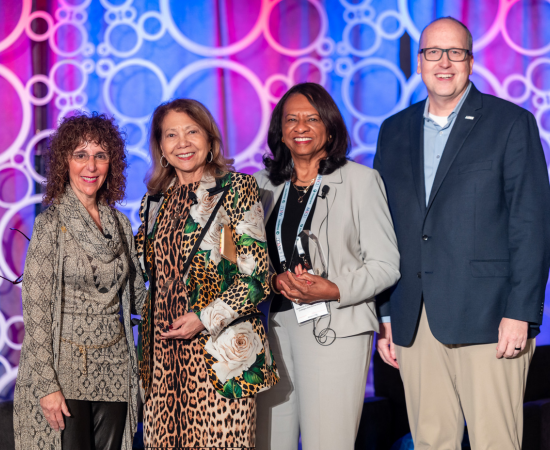
The anniversary conversation featured former AASCU presidents and CEOs Muriel A. Howard and Mildred García, alongside current President and CEO Charles L. Welch. Drawing on decades of experience in higher education leadership, the panelists shared different perspectives on the association’s contributions while returning to a common purpose: ensuring that RPUs have the support, influence and resources to serve their students.
Shaping Policy and Advancing the RPU Mission
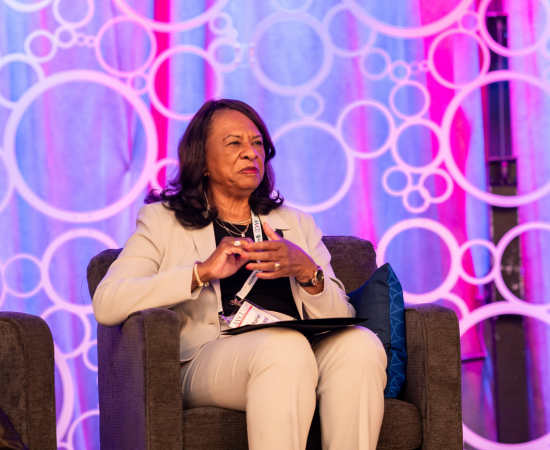
For Howard, one of AASCU’s most consequential contributions has been its work in policy development and government relations. National and state policies shape nearly every aspect of higher education, from enrollment and financial aid distribution to institutional resources, accreditation, and academic initiatives. She emphasized that RPUs have distinct needs that require a policy voice capable of representing their missions and the students they serve.
She recalled the challenges of the 2008 financial crisis, when the collapse of major financial institutions led to steep reductions in state funding for public higher education. As a university president, Howard had to find ways to generate revenue quickly and sustain programs and services that supported students. A fundraising initiative raised several hundred thousand dollars for scholarships, providing direct assistance to students as institutions worked through the financial downturn.
That experience reinforced the importance of AASCU’s advocacy and the need for leaders to remain focused on the students behind every policy decision.
Reflecting on her legacy, Howard spoke about the responsibility of ensuring that students who wanted to attend college had the opportunity to do so, along with the support needed to persist and complete their degrees. She encouraged current and future leaders to develop the skills necessary to lead effectively, including strong communication, board relations and external partnerships.
She also pointed to the value of leadership development, urging AASCU to continue offering programs and resources that prepare presidents, senior administrators and emerging leaders for the responsibilities of institutional leadership.
Elevating the Voice of RPUs
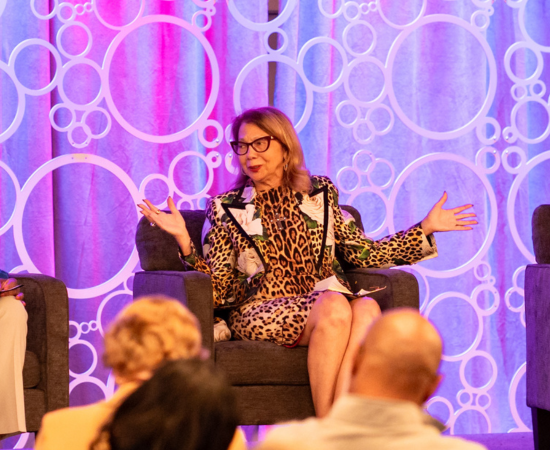
García emphasized AASCU’s role as a national advocate for RPUs and a platform for elevating their contributions. As institutions deeply connected to the communities they serve, regional public universities have stories and perspectives that deserve a stronger presence in national conversations about higher education.
AASCU, she said, helps ensure that presidents’ voices are heard in Washington, D.C., across the country, and internationally. Just as importantly, it reminds policymakers and the public that RPUs are institutions of place, deeply engaged in the economic and social well-being of their communities.
Her own leadership experiences illustrated why that advocacy matters, particularly during periods of uncertainty. García recalled beginning her first presidency in 2001, just days before the Sept. 11 terrorist attacks. While traveling across the George Washington Bridge into New York City, she witnessed the attacks on the World Trade Center and soon found herself navigating an unprecedented crisis. Fourteen students who were completing internships were among those lost, and the university community faced the difficult work of supporting grieving families, students, faculty, and staff.
There was no established playbook for leading a campus through such a tragedy. García described how her team worked around the clock to reassure the campus community and help people navigate the days and weeks that followed.
Years later, as AASCU president and CEO, she again helped university leaders navigate a national crisis during the COVID-19 pandemic. Presidents were making difficult decisions under extraordinary circumstances, sometimes facing threats and criticism as they worked to protect their campus communities.
García also credited AASCU’s leadership development programs, particularly the Millennium Leadership Initiative (MLI), with helping prepare leaders for the presidency. Having participated in MLI’s inaugural class, she spoke to the importance of creating pathways for the next generation of higher education leaders.
Her advice to those leaders was to challenge the status quo, be bold, and remember where they came from. She also encouraged presidents to take joy in the success of their colleagues and the people they serve, recognizing that leadership is not a solitary endeavor.
Leading Through Change and Staying Focused on Students
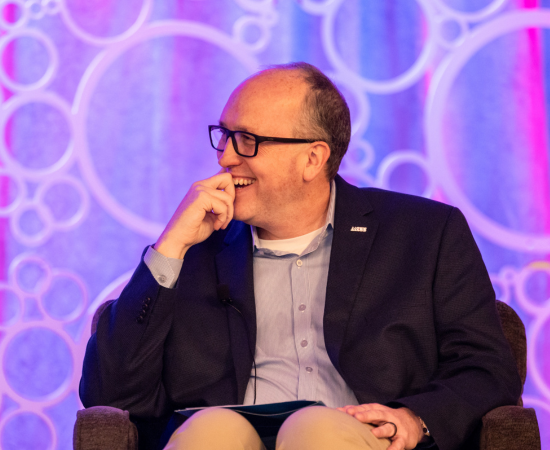
Welch reflected on the importance of relationships and peer support throughout his own leadership journey. At his first AASCU meeting, he recalled seeing university presidents whose commitment to students and student success gave him examples of the kind of leader he hoped to become.
He also reflected on the changing landscape of higher education since he began his first presidency in 2008. The state funding reductions that accompanied the financial crisis never fully returned, leaving institutions to operate in a different financial environment. More recently, higher education leaders have faced increasingly challenging public conversations and scrutiny surrounding institutional policies and practices.
For Welch, one of AASCU’s most important responsibilities is helping policymakers understand the work of RPUs and the consequences that policy decisions can have for their students. He urged leaders not to allow external rhetoric to distract from their institutions’ core missions or limit their ability to serve students.
He acknowledged that leading AASCU during a particularly challenging period has brought its own responsibilities, including supporting presidents as they navigate difficult decisions and conversations. But he emphasized the importance of rising above the rhetoric and remaining focused on what institutions do well.
Welch also reflected on his personal connection to the transformative power of higher education. His father did not graduate from high school, and his grandfather could neither read nor write. Earning a college degree changed the trajectory of his own life, reinforcing his belief that higher education can create opportunities across generations.
He encouraged presidents and chancellors to remember the significance of their roles, even on difficult days. His advice was simple: When leadership becomes challenging, find the nearest commencement ceremony and watch students cross the stage. Those graduates are a reminder of the lives being changed through the work of regional public universities.
Building on 65 Years of Progress
Although each leader brought a different perspective shaped by their experiences, their reflections shared a common thread: AASCU’s strength comes from its ability to bring institutional leaders together, advocate for the distinct mission of regional public universities, and help those institutions remain focused on students.
At the close of the conversation, Welch presented Howard and García with commemorative tokens of appreciation, recognizing their leadership and the foundations they helped build for the association.
As AASCU marks its 65th anniversary, the conversation served as a reminder that its legacy is not defined solely by the milestones it has reached, but by the people, institutions and students whose lives have been shaped by its work. The next chapter will bring new challenges, but the commitment to advancing RPUs and the opportunities they create remains central to the association’s mission.
Explore AASCU’s 65-year history.
Want more posts from AASCU Edge?
Questions about AASCU’s leadership development? Let us know.
"*" indicates required fields
