 AASCU Edge
Democracy Is Something Students Must Practice
Reflections from AASCU’s American Democracy Project at the AASCU 2026 Summer Meeting
Frank E. Ross III, director, American Democracy Project
One of the most important responsibilities of higher education is preparing students not only for careers, but for citizenship.
At a moment when Americans navigate political divisions, changing levels of trust in institutions, and an evolving civic landscape, colleges and universities have an important role to play. We educate millions of students who are preparing for careers while also developing their capacity to participate fully as citizens and members of their communities.
For regional public universities, that role is especially significant. They are places where students encounter new ideas, learn alongside people whose experiences may differ from their own, develop the capacity to engage across differences, and discover that they can shape the world around them.
I was reminded of that duty—and its possibilities—throughout my first AASCU Summer Meeting for Academic and Student Affairs Leaders as director of AASCU’s American Democracy Project (ADP).

Seeing Democracy in Practice
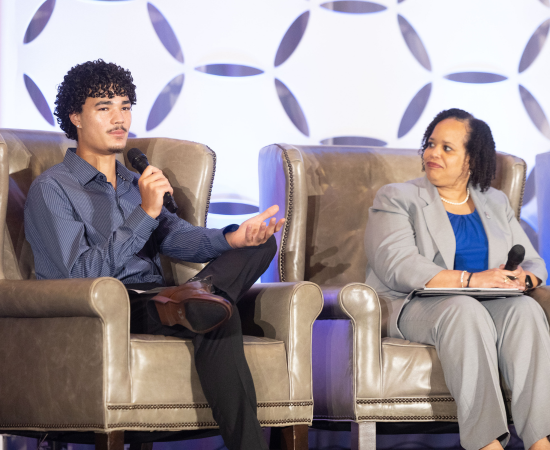
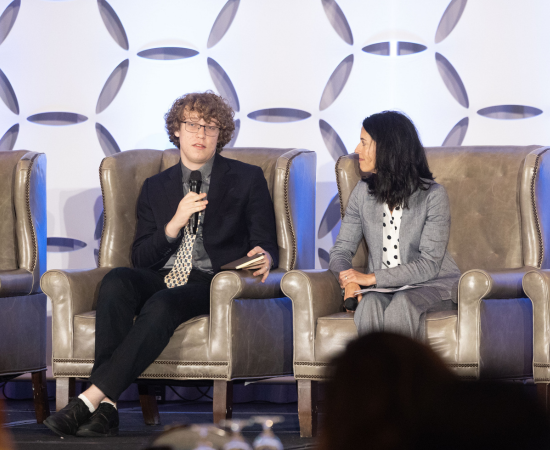
The closing plenary, “Leading for Democracy on America’s Campuses,” brought together academic leaders and students from AASCU institutions for a conversation about civic learning, democratic engagement, and the role higher education can play in strengthening our democracy. The conversation was moderated by Nia Haydel from Complete College America and featured Sterhlyng Adkins-Dutro and Clarenda Phillips of Missouri State University; Jill Arensdorf and Isaac Hargett of Fort Hays State University (KS); and Dimetri Horner of Harris-Stowe State University (MO).
The institutional leaders shared compelling examples of work happening on their campuses. But some of the most powerful voices in the room belonged to the students. They did more than describe civic engagement; they demonstrated what it looks like in action.
They talked about creating opportunities for their peers to participate in civic life, building spaces for dialogue, engaging with issues affecting their communities, and helping other students recognize their own ability to make a difference. What struck me was not simply what these students were doing, but how they understood their responsibility to others.
Their leadership reflected curiosity rather than cynicism. They demonstrated a willingness to engage rather than retreat, and they understood that participation in democracy extends far beyond what happens at the ballot box.
Too often, civic engagement is reduced to voter registration and turnout. Those efforts are essential, and campuses should continue investing in them. But preparing students for democratic participation requires something broader.
It means helping students develop the knowledge, skills, and dispositions necessary to participate meaningfully in public life. It means learning how to listen, deliberate, collaborate across differences, evaluate information critically, understand institutions, exercise agency, and contribute to communities.
In other words, civic engagement is student development.
The students participating in the AASCU Summer Meeting demonstrated precisely that. Through their civic leadership, they were developing capacities that will serve them long after graduation—in their workplaces, their communities, and our democracy.
Their passion, optimism, and commitment gave me tremendous hope. They reminded all of us of what is possible when students are given opportunities to lead and participate.

Creating Space for Difficult Questions
Another important moment for AASCU’s ADP at the convening came through our screening of the documentary “Majority Rules.”
The film examines an intriguing question: What might happen if our electoral system created more room for competition, coalition-building, and participation beyond traditional partisan boundaries?
Following the screening, I had the opportunity to moderate a conversation with Chapman Rackaway from Radford University (VA) and Beth Hladick from Unite America, who also served as a producer on the film.
The discussion provided an opportunity to explore not only the reforms examined in the documentary, but also larger questions about democratic participation, political differences, electoral systems, and the conditions necessary for a healthy democracy.
Higher education should not tell students what to think about the difficult questions confronting our democracy. It should help them develop the capacity to examine evidence, understand competing perspectives, ask better questions, and engage thoughtfully with people who may reach different conclusions. That requires campuses willing to create spaces where challenging ideas can be explored rather than avoided.
A documentary screening and discussion may seem like a relatively simple activity. But it represents something larger: creating opportunities for members of a campus community to encounter ideas, interrogate assumptions, hear different perspectives, and participate in the kind of thoughtful deliberation democracy requires.
Democracy depends not on universal agreement, but on our ability to remain engaged with one another despite disagreement.

The American Democracy Project’s Role
For more than two decades, ADP has helped AASCU members prepare students for lives of informed and engaged citizenship. That work takes many forms across our campuses: voter education and participation, civic learning, dialogue across differences, community engagement, student leadership, faculty development, and opportunities for students to examine some of the most pressing issues facing their communities and our country.
What I saw at the AASCU Summer Meeting reinforced a principle that has long been central to ADP’s work: Democracy cannot simply be something students study. It must be something they practice.
Students can learn to participate in communities, navigate disagreement, work alongside people with different perspectives, evaluate competing claims, solve problems collaboratively, and recognize their own capacity to influence the institutions and communities around them. These are democratic capacities. They are also essential outcomes of a college education.
Importantly, they complement rather than compete with our responsibility to prepare students for successful careers. Employers need graduates who can communicate, collaborate, think critically, navigate complexity, and work productively across differences. Democracy needs those same capacities.
Preparing students for work and preparing them for citizenship are not separate missions. Both are fundamental to preparing students for meaningful lives.

Leaving With Hope
I left the event energized by what I heard from academic leaders, student affairs leaders, faculty, thought partners, and especially students.
There is no shortage of discussion about the challenges facing civic life in the United States. Those concerns deserve serious attention. But our conversations cannot begin and end with the challenges we face.
Across AASCU institutions, students are already demonstrating another possibility.
They are engaging. They are asking difficult questions. They are participating in their communities. They are learning how to lead. And they are discovering that democracy is not something that happens somewhere else, led by someone else. As I begin my work as director of ADP, that may be the most important lesson I carried home.
Give Students Opportunities to Practice Democracy
The work of strengthening civic learning and democratic engagement continues across AASCU campuses. The Innovations in Democracy webinar series brings together campus leaders, scholars, students, and community partners to explore promising approaches, share ideas, and highlight innovative work happening across higher education.
Innovations in Democracy webinar series
Aug. 19, 2026
1:00PM-2:00PM ET
Webinar
More information.Sep. 21, 2026
1:00PM-2:00PM ET
Webinar
Register today.Oct. 15, 2026
1:00PM-2:00PM ET
Webinar
More information.Want more posts from AASCU Edge?
Questions about AASCU’s American Democracy Project? Let us know.
"*" indicates required fields
