Stewardship of Public Lands
This program, held in Glacier National Park, provides interdisciplinary experiential learning and professional development for faculty, staff, and administrators by exploring issues connected to public lands. It leads to strategic intentionality in prioritizing environmental sustainability and constructive discourse on campuses.
Contact us.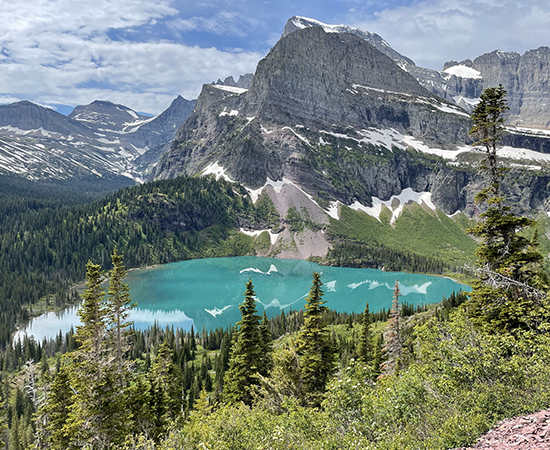
Explore issues of civic engagement and public lands.
Since its launch in 2004 at Yellowstone National Park, AASCU’s American Democracy Project’s Stewardship of Public Lands (SOPL) program has introduced AASCU faculty, staff, and administrators to the complexities of public land management and its connections to democracy, sustainability, and civic engagement. After a COVID-era pause, the program relaunched in 2024 at Glacier National Park, where it is held annually. We are currently accepting applications for the 2026 program which will take place June 15–19, 2026. Participants will leave with stronger civic and environmental leadership skills to apply in teaching, research, and campus programming.
Who should participate?
- Administrators, faculty, and staff who want to explore how stewardship of shared resources connects to civic responsibility and the mission of public universities
How you’ll benefit.
- Develop strategies for integrating sustainability into campus and community
- Plan for experiential student trips to national parks or other public lands
- Explore regional collaborations with cohort members
- Share resources and teaching strategies that help navigate tensions within and about public lands
- Incorporate the United Nations’ Sustainable Development Goals into a broad campus strategy
The Glacier National Park 2026 Program
How does a democracy manage competing but often equally legitimate positions over public resources?
How are the rights of all citizens represented in conflicts over public lands?
The answers to these questions are not straightforward, as public lands reflect deeply held values about access, voice, and preservation that reveal the challenges and opportunities of democratic governance.
Participants will engage in interdisciplinary experiential learning during this professional development opportunity and will create a community of practitioners and collaborators. They will contribute to a compendium of their discoveries, including, but not limited to, ideas for advancing your campus sustainability and stewardship goals, supporting your own universities in sustainably managing campus public lands, and enhancing curricular and programming opportunities for students to become active stewards of place.

- February−May 2026: The cohort engagement begins virtually, building community and deepening knowledge of stewardship efforts and strategies.
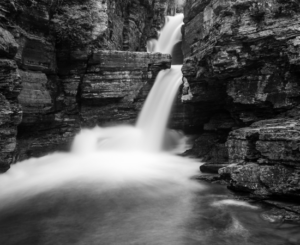
- June 15-19, 2026: The group will meet in Glacier National Park for a five-day/four-night field experience where we will study how rangers, Indigenous communities, scientists, and community members are engaging in productive and inclusive public land management and education.
- July−December 2026: The cohort will put into practice the lessons they’ve learned and collaborate on a compendium of their discoveries, while continuing to meet virtually.
- Dates: Monday, June 15, 2026 through Friday, June 19, 2026 (optional early arrival June 14 for a small additional fee, paid to Glacier Institute)
- Cost: $1950 per person. This includes all lodging, meals, and transportation to and from the Glacier Park International Airport and within the park.
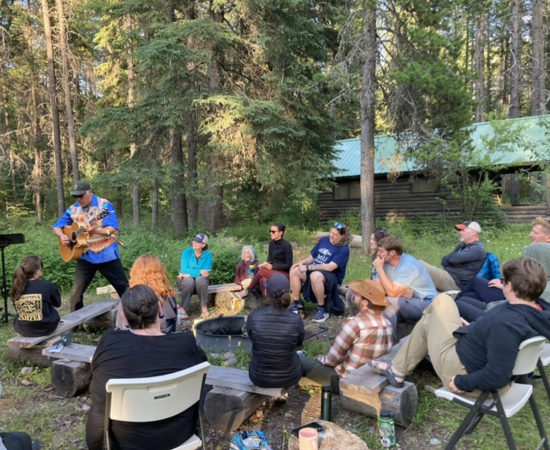
- Lodging: The Glacier Institute’s Field Camp is located inside Glacier National Park’s West Entrance. Field Camp consists of five rustic cabins with twin size beds that can house up to five guests each, however we limit the cohort to no more than 4 people per cabin. There is a separate community bathhouse that has private bathrooms with hot showers. There is also a community house with a fridge to store personal snacks and a fire pit for sharing stories.
- Alternative Lodging: If a shared cabin does not meet your needs, you may arrange alternate lodging at your own expense, and you will be responsible for getting to and from Field Camp each day. If you pursue this option, the full program fee still applies.
- Meals: All meals and snacks will be provided during the stay at Field Camp, and dietary modifications will be honored.
- Transportation: Participants are responsible for their own transportation to/from the Glacier Park International Airport (Kalispell, MT). The Glacier Institute will provide scheduled shuttle trips to and from the airport and their Field Camp during business hours. In-park transportation will be provided during the seminar. If you choose to drive to Glacier, we will arrange parking by the Glacier Field Camp.
Participants are required to join the full in-person field experience in Glacier National Park (June 15–19, 2026), virtual meetings before and after the trip, and produce a final deliverable that demonstrates how lessons from the program are applied on campus or in the community (e.g., syllabi, experiential learning plans, resource guides, scholarly article). The application is where participants begin outlining their proposed deliverable and confirming their commitment to the program.
Applications are open to all faculty, staff, and administrators from AASCU campuses and will be reviewed by program staff beginning December 1, 2025. Reviews continue until the 18-member cohort is full or until the final deadline of January 26, 2026—whichever comes first. Because space is limited, we encourage applicants to apply early. A spot in the program is confirmed only after payment is received.
AASCU will fully refund your payment if you provide Ellen Knutson a written refund request by January 16, 2026. After that date, refunds will not be issued.
Impact
80+
institutions integrated information about public lands or public resources onto their campuses.
200+
participants developed resources to share their work with students.
20+
years of participants creating their own unique programs to explore national parks with undergraduates.
“Overall, I have taken away from the Stewardship of Public Lands cohort two key lessons: (1) the importance of humility about our place within the historical and cultural context of a place as well as within the natural world, and (2) the ability to embrace the complexity of the places and spaces in which we do community engagement, and to tread with care, curiosity, respect, and solidarity within these spaces.”
“As a scholar of Native American and western water history, the AASCU Stewardship of Public Lands Project at Glacier offered a significant opportunity for me to grow in my practice and inquiry. The program helped reinforce and grow my notions that there is a chasm between the Western American view of nature and an indigenous perspective, which holds humans as deeply embedded in the natural order of park lands.”

“Attending the Stewardship of Public Lands conference at Glacier National Park was a deeply meaningful experience. It broadened my understanding of the complexities of land stewardship and reinforced my belief that we must look to Indigenous knowledge and practices to truly care for the land. As a Kia’i (guardian, caretaker, or protector) of the land in Hawaiʻi, I am more committed than ever to integrating these perspectives into our efforts, and I leave this experience with a renewed sense of purpose in my role as a protector of our natural world.”

“Experiencing this firsthand was a game changer for me because it illustrated so powerfully how intertwined all these natural systems are—and how intertwined and interconnected we all are, too.”
“The SOPL workshop was critical in my understanding of considering competing goals, priorities, and methods. It also made me more acutely aware of cultural and economic realities of mixed use properties and facilities, where consensus building must happen BEFORE development can occur.”
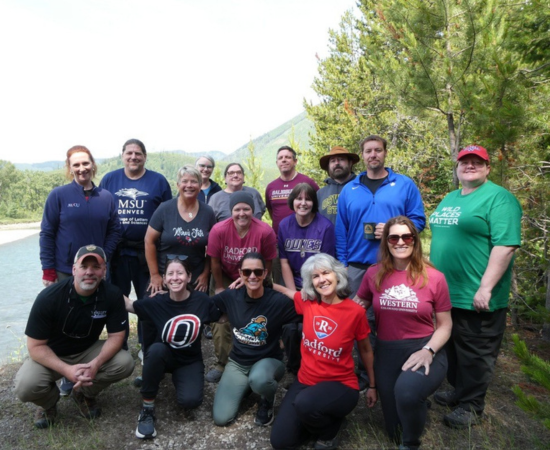
2025 cohort

Harald
Barkhoff
Vice Chancellor for Academic Affairs
University of Hawaii at West Oahu

Jodi
Benenson
Associate Professor
University of Nebraska at Omaha

Aysha
Bodenhamer
Sustainability Manager
Radford University (VA)

Christy
Bradburn
Adjunct Faculty
James Madison University (VA)
Joan
Brehm
Department Chair/Professor; Co-Director of the Center for a Sustainable Water Future
Illinois State University

Jarrod
Hagadorn
Professor, Cinema and Screen Studies
State University of New York at Oswego

Christopher
Jennings
Professor/Department Chair
Metropolitan State University of Denver

Julie
Lester
Associate Professor of Political Science and MPA Program Coordinator
Valdosta State University (GA)

Pam
Martin
Professor and Exec Director, RISE Center, a UN Regional Centre on Education for Sustainable Development
Coastal Carolina University (SC)
Shaun
Mooney
Executive Director First Gen Student Success
James Madison University (VA)

Cayle
Moreo
Sustainability Director
Indiana State University

Erin
O’Hanlon
Coordinator of Service-Learning
Stockton University (NJ)
Sandy
Pope
Associate Professor, Education; Director, Institute for Public Affairs and Civic Engagement
Salisbury University (MD)

Christine
Small
Professor of Biology and Associate Dean of Artis College of Science and Technology
Radford University (VA)
Brooke
Zanetell
Assistant Professor
Western Colorado University
Program resources
The 2024 SOPL compendium highlights how this cohort’s work is being implemented on AASCU’s ADP campuses through course plans, syllabi, engagement plans, research, and reflections.
See how the 2024 cohort's work is being implemented.Released in 2010, this monograph details the work of the AASCU institutions as they explore the various issues surrounding the controversies over public lands.
Read the full report.A faculty member’s story of how she implemented lessons learned from the initiative.
Read more.Member Spotlight
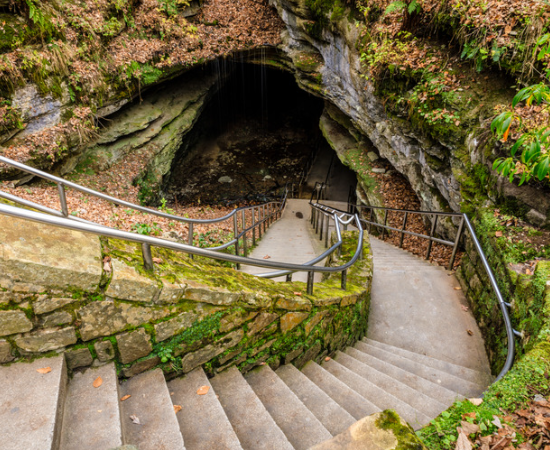
Mammoth to Mammoth documentary
Three faculty members at Western Kentucky University created this film while they participated in the American Democracy Project’s Stewardship of Public Lands Seminar, a one-week professional development course in Yellowstone National Park. As they studied the history, science and politics of some of the major controversies in the Yellowstone ecosystem (snowmobiling, grizzly bears, and bison), they developed a team-taught course to deploy at their local national park, Mammoth Cave.
Watch video.Questions about the Stewardship of Public Lands? Let us know.
"*" indicates required fields
