Bridging Student Readiness Gaps
Join experts from EAB for a discussion on the student readiness crisis.
Thank you for your interest in the Student-Centered Course Scheduling project supported by The Ascendium Education Group. A cohort of 20 institutions will be selected for this 24-month project to begin September 2025 and end in December 2027. In order to be considered for participation, please complete the following application. Institutions will be selected based on how well the goals of this project align with institutional priorities, current or identified future work, readiness for change, and the capacity to fully participate. Please follow the instructions outlined in the questions below, and submit your completed application by September 15, 2025. A copy of your responses will be emailed to you after submission.
You will receive a confirmation email shortly with a summary of your submission and information on next steps.
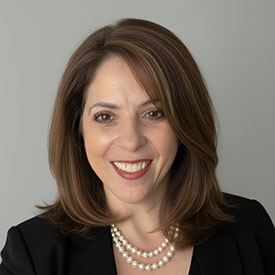
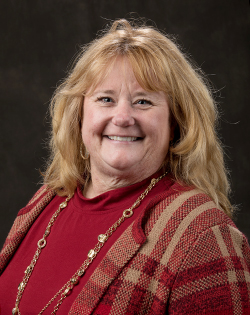
For questions or further information, please contact Lisa Hunter or Samantha Raynor. Thank you for your interest!
With funding from Ascendium Education Group, AASCU is helping regional public universities redesign course scheduling systems to accelerate student progress and completion—and share proven strategies with the field.
View participating institutions. Access tools & resources.
The Student-Centered Course Scheduling initiative supports 20 AASCU member institutions in transforming how courses are offered, sequenced, and staffed—so students can get the courses they need, when they need them, to stay on track to graduation.
At many institutions, the course schedule has become a structural barrier to completion. Misaligned offerings, scheduling conflicts, and outdated policies can delay graduation and increase costs for students. AASCU’s work helps colleges use data, policy, and collaboration to make the course schedule a strategic driver of completion and retention.
Fewer than half of students at 4-year public institutions graduate within 4 years, with each additional semester of enrollment adding thousands in tuition and living costs, pricing many students out before they can finish their degree. (National Center for Education Statistics (NCES), 2024)
Students who work 20+ hours per week are 1.5x more likely to delay a required course than peers who don’t work. (National Center for Education Statistics (NCES), 2022)
Nearly one in three students report being unable to register for at least one required course each term, delaying their progress to graduation. (Ad Astra Institute, 2023)
Roughly one in five courses at regional public universities operate below 70% of capacity, while others are overfilled—showing deep misalignment between course supply and student demand. (Ad Astra, 2022)

AASCU, with technical assistance from trusted partners, supports participating institutions through four key strategies to improve degree velocity and student success:

From 2022–2024, AASCU worked with 11 regional public universities in an earlier pilot project to test and refine this approach. The results were clear: smarter course scheduling leads to faster student progress and higher completion.
increase in students completing first-year English and math courses (Fall 2022–Fall 2024)
credit increase in average productive credits earned per student annually (an 8.1% improvement)
In addition to these overall gains, individual institutions achieved measurable improvements in areas such as course access, classroom utilization, and student momentum. Examples include:
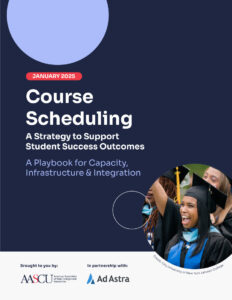
Explore the Course Scheduling Playbook for clear definitions of the key metrics used throughout this initiative.

The playbook, created as a result of a previous initiative, is a guide for any institution interested in levering their course schedule as a strategy for improving student success. It introduces project phases designed to drive innovation and momentum, project management strategies, and relevant metrics, to support the teams empowered to do this work.

Our team is here to support institutions exploring course scheduling reform and to connect those interested in future learning opportunities or resources from this work.
"*" indicates required fields
Join experts from EAB for a discussion on the student readiness crisis.
There is no excerpt because this is a protected post.
There is no excerpt because this is a protected post.
A call to action for leaders and institutions to foster civic learning and democratic engagement.
AASCU invites submissions to present at the American Democracy Project Summit, happening July 13-14, 2025 in Indianapolis, IN. We seek a diversity of perspectives and experiences, and we especially encourage presentations that include students and feature teams.
Democracy can be frustrating, slow, and contentious. Often, the civic engagement work done on a campus can feel isolated and be un- or under-appreciated. This meeting will change that narrative by showcasing that, through AASCU’s American Democracy Project, there are resources and a community that exists to help build and grow civic engagement within higher education.
Meeting details.Topical Sessions (45-minute sessions): Presentations, which could be led by an individual or a group, designed to share best practices and/or facilitate conversations about the practical application of civic and community engagement projects. If accepted, you may be paired with another concurrent session to share the 45-minute time block.
Ignite Talks (5-minute sessions): Designed for individuals to share compelling, innovative practices on a large stage, ignite talks use 20 slides that automatically advance every 15 seconds and requires speakers to be concise, prepared, and dynamic.
Poster Sessions: Textual and graphical presentations of civic engagement projects or research.
We recognize how interconnected the field of civic engagement is. This topic selection allows us to maintain a diverse portfolio of options.
What are the key features of the thriving democracy we hope to enact and support through our work?
What knowledge, skills, and dispositions contribute to a thriving democracy, and how do we embed this in our work?
How can we build the institutional culture, infrastructure, and relationships needed to support learning that enables a thriving democracy?
Join a community that builds and supports civic engagement within higher education.
| State | 4-Year Institution | 2-Year Partner |
|---|---|---|
| AL | Athens State University | John C. Calhoun State Community College |
| AZ | Northern Arizona University | Arizona Western College |
| CA | California State University, Channel Islands | Oxnard College |
| IL | Western Illinois University | Spoon River College |
| MA | Westfield State University | Holyoke Community College |
| TX | Texas A&M University – Texarkana | Texarkana College |
| TX | University of Houston, Victoria | Victoria College |
| VA | James Madison University | Blue Ridge Community College |
| WA | Washington State University – Everett | Everett Community College |
| WI | University of Wisconsin – Parkside | Gateway Technical College |
| State | 4-Year Institution | 2-Year Partner | System/State Partner |
|---|---|---|---|
| CO | Adams State University | Trinidad State College | |
| GA | Columbus State University | Lorain County Community College | |
| IN | Indiana University – Purdue University Indianapolis | Ivy Tech Community College | Central Indiana Campus | Ivy Tech Community College System |
| MD | University of Maryland Eastern Shore | Wor-Wic College | |
| NY | State University of New York, College at Geneseo | SUNY Corning Community College | |
| NJ | New Jersey City University | Hudson County Community College | |
| NJ | William Paterson University | Bergen Community College | |
| NC | University of North Carolina Wilmington | Piedmont Community College | |
| OH | Cleveland State University | Lorain County Community College | |
| PA | East Stroudsburg University | Northampton Community College | |
| SC | University of South Carolina Aiken | University of South Carolina Palmetto Colleges: USC-Lancaster, USC-Salkehatchie, USC-Sumter, USC-Union | |
| TX | Texas A&M University – San Antonio | Palo Alto College | |
| TX | Texas State University | Austin Community College | |
| TX | University of Houston – Clear Lake | San Jacinto College | |
| WA | University of Washington Tacoma | Pierce College District | |
| WA | Washington State University Vancouver | Clark College |
| State | 4-Year Institution | 2-Year Partner | System/State Partner |
|---|---|---|---|
| CA | California Polytechnic State University, San Luis Obispo | Allan Hancock College | |
| CT | Southern Connecticut State University | Gateway Community College | Connecticut State Colleges and Universities system (CSCU) |
| FL | University of Central Florida | Miami Dade College Kendall Campus | |
| MA | Salem State University | Northern Essex Community College
North Shore Community College |
|
| MI | Ferris State University | Grand Rapids Community College | |
| MN | Bemidji State University | MN North Colleges: Hibbing Community College, Itasca Community College, Mesabi Range Colleg,e Rainy River Community College, Vermilion Community College | |
| MN | Metropolitan State University | Minneapolis College | |
| NY | State University of New York, Buffalo State College | SUNY Erie Community College | |
| NC | University of North Carolina – Greensboro | Guilford Technical Community College | |
| RI | Rhode Island College
University of Rhode Island |
Community College of Rhode Island | Rhode Island Office of the Postsecondary Commissioner (RIOPC) |
| SC | The Citadel, Military College of South Carolina | Trident Technical College | |
| SC | Lander University | Piedmont Technical College | |
| TX | West Texas A&M University | Amarillo College | |
| WA | Western Washington University | Olympic College | |
| WI | University of Wisconsin-Green Bay | Northeast Wisconsin Technical College |
"*" indicates required fields
This content is for GRC members only. If you are a GRC member, please click the Login button to access the content.
If your institution is already a GRC member, request your username and password information here.
Request credentials.Contact GRC to discuss membership benefits at GRCmembership@aascu.org or 202-478-7810.
Learn more.