Innovation in Career Services

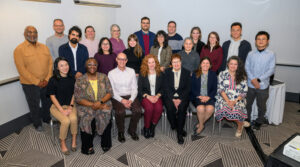
Strada Education Foundation, in partnership with the American Association of State Colleges and Universities and the Association of Public and Land-Grant Universities, awards eight Innovation in Career Services grants to institutions focused on quality education-to-career guidance.

Contact us.

Eight institutions are scaling innovative guidance and career services on their campuses.

AASCU and the Association of Public and Land-Grant Universities are working with Strada Education Foundation to support a program in which institutional partners receive technical assistance to design, implement, and evaluate innovative approaches to career services that are aligned with Strada’s principles for education-to-career guidance. This program will run from January 2025 to December 2027.

By fostering cross-institutional collaboration and data-informed innovation, this network will drive systemic improvements in career guidance. Areas of innovation include incorporating labor market information into career guidance, embedding career guidance into core student experiences, and using technology to scale career guidance. The initiative aims to create sustainable, student-centered approaches that ensure every graduate has access to high-quality career opportunities.

The principles that define quality education-to-career guidance:

  • Centered on education-to-career outcomes
  • Driven by student agency
  • Foundational and universal
  • Rooted in relationships
  • Informed by data and evidence
Learn more.

Program Participants

The five AASCU institutions awarded grants are:

  • Athens State University (AL)
  • Morgan State University (MD)
  • Northern Arizona University
  • Prairie View A & M University (TX)
  • San Diego State University (CA)

The three additional institutions awarded grants are:

  • Georgia State University
  • University of Central Florida
  • University of Iowa
+
Guam
Puerto Rico
U.S. Virgin Islands
Bahamas
Canada
Mexico

    “Using the education-to-career principles as their guide, [these campuses] will demonstrate how career advising and guidance can make the difference in improving post-completion outcomes for students, particularly those who have traditionally faced the greatest challenges.”

    Ruth Watkins

    President of Postsecondary Education
    Strada Education Foundation

    Partners

    Questions about Innovation in Career Services? Let us know.

    "*" indicates required fields

    From Campus to Career

    Advancing Career Connected High-Impact Practices

    Lumina Foundation, in partnership with AASCU and national intermediaries, is supporting institutions in scaling and institutionalizing career-connected high-impact practices (HIPs) — transformative educational experiences that deepen learning, boost degree completion, and prepare students for meaningful careers. With funding ranging from $80,000–$100,000 for up to 15 institutions, this opportunity goes beyond grant support—it offers the chance to shape national practice, join a peer learning community, and access technical assistance from experts in the field.

    Contact us.

    A cohort of bachelor’s degree-granting institutions seeks to advance and scale career-connected HIPs.

    What if every student left college with the skills, experience, and confidence to thrive in today’s workforce? Career-connected high-impact practices – such as internships, undergraduate research, study abroad, service learning, and capstone projects – are powerful tools to make that vision real. These experiences not only deepen learning and boost degree completion, but when intentionally aligned with career pathways, they also help ensure every student is prepared for a meaningful career.

    Lumina’s official award announcement will be released in March/ April.

    Learn more about this opportunity at Lumina Foundation.

    Lumina’s Jasmine Haywood and Rob Shorette explain how career-connected HIPs can help students succeed beyond graduation.

    Why this work matters:

    Career-connected HIPs aren’t optional extras — they are high-impact, equity-driven components of a student’s journey. When intentionally aligned with career pathways and workforce needs, these experiences help ensure all students graduate with the skills, confidence, and networks to thrive in a rapidly changing world.

    Benefits of participation:

    • Each institution will receive $80,000 – $100,000 from Lumina Foundation to support project activities
    • Receive technical assistance from nationally recognized experts in the field to strengthen your efforts
    • Learn from peers and be part of a community that shapes national practice

    Check back in March 2026 when the awardees will be announced.

    High-impact practices are teaching and learning approaches that promote deep, meaningful learning by engaging students in active, applied, and reflective experiences. They help students integrate knowledge, build skills, and strengthen academic success and long-term growth. Among them are common intellectual experiences, diversity and global learning, first-year experiences, collaborative projects, writing-intensive courses, community-based learning, and undergraduate research.

    Lumina Foundation is seeking letters of interest for a grant opportunity for up to 15 institutions to scale career-connected HIPs on their campuses. Applicants must seek to pursue ambitious and innovative HIPs strategies, but the benefits extend far beyond the direct funding to support this work, including:

    • An opportunity to shape national practice in career-connected HIPs among exemplar institutions from across the U.S.;
    • Participation in a learning community of peer institutions facilitated by intermediaries such as the American Association of State Colleges and Universities (AASCU), Excelencia in Education, and the Center for Innovation in Postsecondary Education (CIPE) at the University of South Alabama;
    • Tailored technical assistant provided by national experts to support the success of campus implementation;
    • And direct funding ranging from $80,000 to $100,000 for each grantee.

    Only institutions that meet the following criteria will be considered:

    • Accredited, bachelor’s degree-granting colleges or universities in the United States (bachelor’s degree granting community colleges are not eligible for this grant opportunity).
    • Demonstrated commitment to intentionally embed career preparation into curricular or co-curricular experiences.
    • Demonstrated experience in implementing and assessing multiple HIPs (beyond isolated programs or majors).
    • Committed to ensuring access, participation, and outcomes across student populations.

    Priority consideration will be given to the following:

    • American Association of State Colleges and Universities (AASCU) member institutions
    • Seal of Excelencia Certified institutions
    • Public or private HBCUs

    Questions about From Campus to Career? Let us know.

    "*" indicates required fields

    Rural Student Success Network

    Ithaka S+R is collaborating with AASCU to gather a set of institutions seeking to share strategies, strengthen student success programs, and align academic offerings with local workforce needs.

    Contact us.

    Join a network of rural-serving institutions supporting student success and economic mobility.

    Rural-serving institutions are engines of opportunity and vital to their communities. Yet, many face unique challenges: shifting demographics, declining enrollment, and limited resources. Boosting enrollment, improving student outcomes, and aligning degree offerings with local and regional labor market needs can help, but many rural-serving institutions need additional support to tackle these challenges together.

    To offer this support, Ithaka S+R, in collaboration with the American Association of State Colleges and Universities (AASCU), is launching the Rural Student Success Network . Through technical assistance, capacity building, and peer connection, this new initiative will help rural-serving institutions share strategies, strengthen student success programs, and align academic offerings with local workforce needs. The lessons learned from this network will generate actionable insights that can benefit rural-serving institutions across the country.

    The Rural Student Success Network is supported through ECMC Foundation’s Rural Impact Initiative, which is dedicated to improving postsecondary access and success in rural communities with an emphasis on building institutional capacity, deepening understanding of the strengths and challenges of rural-serving institutions, and advancing strategies that increase completion rates. The Network and the efforts of its participants are an extension of this vision and promise to expand postsecondary opportunities for rural learners everywhere.

    Learn more about this program at Ithaka S+R.

    Who should participate:

    • AASCU members who are rural-serving institutions with an interest in:
      • Helping community college transfer students complete their bachelor’s degree
      • Enrolling and supporting adult learners
      • Aligning academic offerings with local and regional labor market needs

    How they benefit:

    • Each selected institution will receive a $15,000 subgrant from Ithaka S+R to support staff participation in project activities, which include data sharing, convening attendance, and self-assessment activities
    • Receive technical assistance, capacity building, and peer connection
    • Share strategies, strengthen student success programs, and align academic offerings with local workforce needs
    • Generate actionable insights that can benefit rural-serving institutions across the country

    Request for Participation

    Deadline: Oct. 3, 2025
    Institutions selected: October 14, 2025
    Program timeline: Oct. 2025–June 2026


    Informational webinar

    What to Expect

    Participation in the student success network will provide institutions with key resources to propel their student success goals forward and support degree attainment. Participating institutions will also contribute to key insights for a case study report and summative brief, which will highlight best practices and provide a roadmap for similar institutions looking to maximize student success and grow in the three focus areas.

    The 18 selected institutions will form a cohort dedicated to contributing to shared knowledge pertaining to student success, developing systems for self-assessment and continuous improvement, and tailoring institutional approach to student outcome and economic data. The benefits for participants include:

    1. Access to a peer network. Engage with fellow rural-serving institutions to share best practices and collaborate on student success initiatives.
    2. Data-driven decision making. Receive customized reports and insights that recommend strategies to enhance student success programs to a) align with evidence-based practices, b) maximize enrollment and completion, and c) meet regional workforce needs.
    3. Technical assistance and expert guidance. Ongoing support, capacity-building, and continuous learning planning assistance to enhance institutional effectiveness. This includes 1:1 technical assistance in between learning sessions.
    4. Institutional recognition. Possible opportunities to present at national conferences and/or contribute to publications in collaboration with Ithaka S+R and AASCU.

    The cohort members will engage in the network through virtual and in-person convenings, participate in quarterly virtual one-on-one check-ins with the Ithaka S+R team, and learn from both existing research and project insights. Institution-specific reports will examine educational and economic outcomes based on available institutional, state, and federal data. Ithaka S+R will draft and publish a public case study report and summative brief at the end of the grant period to provide a framework for other rural-serving institutions looking to maximize student success and completion.

    Each selected institution will receive a $15,000 subgrant from Ithaka S+R to support staff participation in project activities, which include data sharing, convening attendance, and self-assessment activities.

    Please submit written responses to these three questions:

    1. How does participation in this project align with your institutional goals for student success, particularly re-engaging adult learners, supporting transfer students, and meeting workforce needs?
    2. What strengths, priorities, and capacities will your institution bring to this network, and how will you ensure meaningful engagement across stakeholders?
    3. What challenges do you anticipate, and what types of support or learning would be most useful to your institution throughout this project?

    Your responses along with a letter of support from your institution’s president should be submitted through this online form by October 3, 2025. A selection decision will be made and communicated by October 14, 2025 following project team review.

    1. Institutional capacity to participate in outlined project activities and meaningfully engage with the student success network.
    2. A clear vision for how this project aligns with institutional goals and how it can be integrated into current work.
    3. Demonstrated vertical buy-in, including support from executive leadership, to maximize institutional impact by implementing student-centered practices that support student success, especially that of adult learners and transfer students.
    1. Serve as a thought partner and active participant in each learning session and the final convening designed to assist members in identifying policies, practices, and processes that propel institutional student success goals.
    2. Engage in technical assistance sessions meant to facilitate self-assessment and continuous improvement.
    3. Collect and share programmatic and institutional data as necessary to craft institution-specific reports, guide continuous improvement, and identify key insights.
    4. Dedicate staff time to participate in learning and technical assistance sessions and any minimal preparation for these activities.

    Note: We estimate that the time commitment for providing relevant programmatic information and completing self-assessment activities is approximately eight hours, which should include collaboration between senior leaders and program administrators. Beyond this, institutions have the flexibility to engage as deeply as their capacity allows in individualized technical assistance and customized data reporting provided by Ithaka S+R.

    1. Identify priorities related to student success and develop a plan to address existing gaps or build on current strengths, improving processes, policies, and therefore outcomes, related to student success.
    2. Participate in up to four virtual sessions (90 minutes each) to explore current programs, policies, and processes and drive improvements, and attend an in-person convening with all participating institutions.
    3. Complete pre- and post- meeting assignments to advance project work and attend 1:1 virtual meetings (approximately one hour) with Ithaka S+R coaches in the months between learning sessions to check-in on progress.
    4. Identify, collect, and share relevant student outcome data for institution-specific reports.
    5. Complete a survey to capture key details about each institution’s student success programs specific to the three focus areas and a self-assessment of existing student success programs.
    6. Provide feedback and input to Ithaka S+R and AASCU regarding process and learnings that will be used as part of the evaluation of this project provided to the funder.

    Rural-Serving Institution Student Success Network Partner

    With support from

    Questions about the network? Let us know.

    "*" indicates required fields