AASCU 2026 Summer Meeting for Academic and Student Affairs Leaders
Offering opportunities for RPU colleagues to meet, share, and learn from each other’s challenges and successes.
Offering opportunities for RPU colleagues to meet, share, and learn from each other’s challenges and successes.
This faculty and staff cohort supports redesigning community-based courses to align civic learning with economic mobility goals. Participants work with peers and experts to strengthen student success, deepen community partnerships, and put research into action.
Contact us.
If you partner with community organizations to support students’ civic voice or design learning experiences that connect students and families to educational and economic opportunity, this cohort invites you to deepen that work and strengthen its connection to economic mobility.
AASCU, in partnership with Public Agenda, invites faculty and staff from member institutions to apply to participate in a cohort of instructors who will redesign existing community-based learning courses to integrate economic mobility goals and frameworks.
Public Agenda is a research-to-action organization dedicated to building a strong and healthy democracy. In their recent research on how institutions of higher education contribute to positive economic mobility for students from low-income backgrounds, Public Agenda finds that community-based courses and programs can be powerful tools for supporting the recruitment and retention of low-income students when they are explicitly aligned with economic mobility goals. Their research also suggests that public four-year institutions that enroll large numbers of low-income students from the local community could be central to systemic efforts to improve mobility, because graduates from these institutions often remain in the community, contributing to the economy and civic life.
This partnership between AASCU and Public Agenda puts these research findings into action. Cohort participants will work directly with peers and experts to redesign current community-based courses to align with strategies for positive economic mobility outcomes.
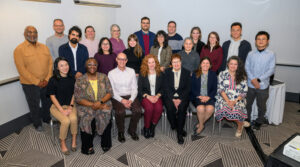
Faculty and staff who teach community-engaged courses at:

Associate Teaching Professor
University of Washington Bothell
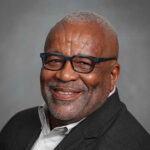
Associate Professor, Sociology, Anthropology and Gerontology
Missouri State University

Assistant Professor, Sociology Department
California State University Sacramento

Associate Professor, School of Interdisciplinary Programs and Community Engagement
The University of Texas Rio Grande Valley

Assistant Professor, Computer Science and Engineering
California State University, San Bernardino

Assistant Professor, History
California State University, San Bernardino
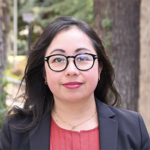
Assistant Professor, College of Education
California State University Sacramento

Faculty Lecturer in College of Education
The University of Texas Rio Grande Valley

University Lecturer
The University of Texas Rio Grande Valley
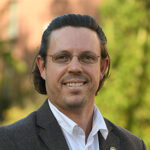
Associate Professor, Education; Director, Institute for Public Affairs and Civic Engagement
Salisbury University (MD)

Chair, Art Department
University of North Carolina at Pembroke

Assistant Professor of Education, Early Childhood Studies
California State University Channel Islands

Biology Lecturer
University of Hawai’i at Hilo

Assistant Professor, Computer Science and Engineering
California State University, San Bernardino

Assistant Professor of Marketing
University of Hawai’i at Hilo
Participating instructors will commit to:
In addition to training and technical assistance related to course redesign, each participating instructor will receive a $3,000 stipend to support time on the project and attendance at the American Democracy Project conference. AASCU will waive the conference registration fee. The cohort will be limited to 15 people.
The application includes the following questions:
Applications will be evaluated by AASCU and Public Agenda staff, with support from an expert advisory group, based on the following criteria:
Yes.
Yes. Instructors must apply separately.
No. For example, many first-year experience courses may meet the application requirements.
Yes.
No. The training and cohort workshops are focused on reimagining courses that already connect students with communities to more explicitly focus on how they can drive economic mobility—as opposed to a focus on new community-based course construction.
No. All community-based course instructors at AASCU member institutions are welcome to apply.

"*" indicates required fields
AASCU presidential delegation to advance global partnerships.
Urge to withdraw a proposed rule prioritizing H-1B visas by wage level.
Building global affairs literacy to prepare students as civic leaders in today’s interconnected world.
Expressing concerns that the proposed rule is
unnecessarily burdensome and costly.
Raising serious concerns and in strong opposition to the proposed rule.
Join us in Chicago to focus on civic learning at regional public universities.
AASCU Members are empowering students as informed, active participants in the democratic process, from voter registration to lifelong civic engagement.
of AASCU campus students exercise the right to vote, compared to 50% of students at other colleges.
AASCU Members are deepening their institution’s role as a community anchor, fostering connections that link student learning with local impact.
Explore issues of civic engagement and public lands at Glacier National Park.
This content is for GRC members only. If you are a GRC member, please click the Login button to access the content.
If your institution is already a GRC member, request your username and password information here.
Request credentials.Contact GRC to discuss membership benefits at GRCmembership@aascu.org or 202-478-7810.
Learn more.