Student-Centered Course Scheduling
Sharing Insights
Institutions that invite input on course scheduling create an expectation that they will report back on what they learn. Meeting that expectation matters: When findings are shared openly, participants see their contributions reflected in the work, and the case for change becomes a shared conclusion rather than an administrative decision.
Reporting back is also a substantive step, not simply a courtesy. Student and faculty perspectives are most useful when presented alongside scheduling data, where each source clarifies the other. Lived experience explains what the metrics cannot, and the data confirms which concerns are widespread rather than anecdotal.
The resources included here draw on best practices from the AASCU Student-Centered Course Scheduling initiative to help institutional leaders share early findings with the campus community, combining feedback and analytics to establish a common understanding of where the schedule is working and where it is not.
What’s Included
This resource includes a customizable slide deck along with a companion email and social media content to help institutions share early findings with the audiences who contributed to them.
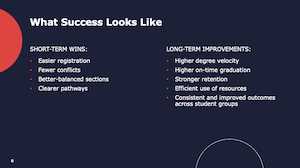
- Deck: A presentation template for reporting student and faculty input alongside scheduling data to faculty, staff, and institutional leadership. Slides include placeholder charts, a structure for organizing findings across infrastructure, course offerings, capacity, and student outcomes, and space to articulate what those findings mean for your institution and what will happen next.
- Email Copy: A ready-to-customize message for deans, faculty, and staff that acknowledges participation, summarizes emerging themes, and outlines next steps.
- Social Media Copy and Graphics: Posts tailored for two audiences: colleagues on LinkedIn and students on institutional channels.
Before You Begin
Three resources from the initiative precede this one, and together they generate much of the content this deck is designed to present.
- Introducing the Work: Establishes the case for student-centered course scheduling and sets the expectation that the institution will return with what it learns. This resource completes that commitment.
- Feedback Toolkit: Surveys, focus group guides, in-class polls, and event activities that produce the student and faculty insights presented on slides 3–9.
- Course Scheduling Data Guide: Definitions and framing for the scheduling metrics presented on slides 11–14.

Student-Centered Course Scheduling Partners



Explore More Course Scheduling Resources
Resources
Webinars
Sep. 3, 2026
2:00PM-3:00PM ET
Webinar
More information.Jul. 30, 2026
1:00PM-2:00PM ET
Webinar
More information.Jun. 12, 2026
1:00PM-2:00PM ET
Webinar
More information.Apr. 27, 2026
2:00PM-3:00PM ET
Webinar
More information.Questions about Student-Centered Course Scheduling? Let us know.
"*" indicates required fields
