


A Call to Action: Translating the Spirit of Stewardship of Place into Practice
A practitioner guide providing tangible
examples of campus actions that bring this mission to life.
Explore the rich history, powerful outcomes, and pervasive impact of these American Democracy Project programs.
Through partnership with World101 from the Council on Foreign Relations, faculty and staff designed curriculum, activities, and assessments to help students increase their knowledge of our global society and understand how global issues influence lives of everyday citizens. Occurring from 2019-2022, more than 80 faculty and staff from over 40 institutions participated in this project.
For more information and to access the critical resources that they created, please explore:
The Political Engagement Project (PEP), a partnership with the Carnegie Foundation for the Advancement of Teaching, advanced democratic and electoral engagement by providing students with both tangible and critical-thinking skills for participating in the political world.
The Engaged the Election 2016 project, a partnership with The Democracy Commitment and icitizen, a civic engagement app, advanced informed nonpartisan engagement in the presidential election.
The Economic Literacy project was in partnership with Up to Us,and included over 40 faculty at 19 institutions. Designed to help students increase their knowledge of the U.S. national debt, fiscal policy, and overall financial literacy, faculty created a toolkit to share their strategies and resources more broadly.
The Economic Inequality Initiative focused on understanding the impact of economic inequality on our democracy while helping students think about and take action to confront its complex causes.
The America’s Future Initiative, a partnership with Public Agenda from 2008 to 2011, focused on educating students about looming national debt and deficits, while exploring potential solutions.
The Deliberative Polling Initiative, a partnership with the Center for Deliberative Democracy, engaged 29 AASCU campuses in the exploration of strategies to engage students, faculty, staff and community members in discussions about public issues and to develop students’ citizenship skills.
The eCitizenship Initiative, a partnership with the Center for the Study of Citizenship at Wayne State University from 2009 to 2012, brought together campuses to examine how emerging technologies, particularly social networks, support and facilitate civic and political engagement.
The Civic Agency Initiative, a partnership with the Center for Democracy and Citizenship from 2008 to 2012, sought to produce a series of national models for developing civic agency among undergraduates.
The Campus and Community Civic Health Initiative, a partnership with the National Conference on Citizenship (NCoC) from 2012 to 2014, was designed to identify and develop campus and community civic health assessments and tools, as well as action plans that responded to the findings.
"*" indicates required fields
This standout event convened a diverse range of stakeholders to ensure that students who graduate from colleges and universities, both public and private, are prepared to be the informed, engaged citizens our communities and democracies need.
We are tremendously proud of the impact CLDE has made in this critical area. However, the 2024 conference was the final conference under the AASCU/NASPA partnership. In 2025, AASCU will be hosting the American Democracy Project Summit to continue this work.
Both AASCU and NASPA remain deeply committed to supporting civic learning and democratic engagement across the country and with professionals across campuses.
Although the meeting will not continue in its current form, AASCU and NASPA look forward to exploring other meaningful avenues to partner and collaborate to ensure that professionals committed to civic engagement work at their institutions can share best practices and learn from one another in new and innovative ways.
Both AASCU and NASPA value our shared history of work together in this space and look forward to collaborating in the future to ensure that higher education meets its obligation to prepare students who value and engage in the health of our democracy.
June 5-7
June 2-4
June 7-9
June 2-4
"*" indicates required fields
A practitioner guide providing tangible
examples of campus actions that bring this mission to life.
AASCU’s American Democracy Project recognizes individual leadership at the provost, faculty, and staff levels in civic engagement on AASCU member campuses.
Questions?Our work to equip students with the knowledge, skills, and experiences to be informed and engaged, ready to tackle current and future issues to ensure a thriving democracy is more important than ever. The American Democracy Project recognizes leadership in civic engagement on AASCU member campuses through four individual awards and one institutional award.
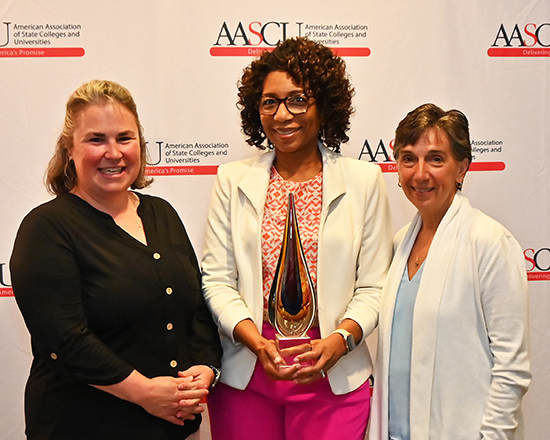
in recognition of exemplary leadership by a chief academic officer.
Learn more.One of AASCU’s Excellence & Innovation Awards, given to recognize institutional team commitment to meaningful and deep civic engagement work.
Please note that the We the People Award is on hiatus in 2025.
Learn more.Given in recognition of exemplary faculty leadership in advancing the civic learning and engagement of undergraduate students.

Leah Murray
Director, the Olene S. Walker Institute of Politics & Public Service and Brady Presidential Distinguished Professor of Political Science
Weber State University (UT)
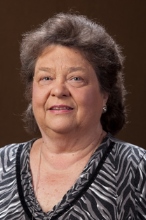
During her time as provost, Barbara Burch strongly supported faculty in the development of civic programming at Western Kentucky University. She actively sought out talented faculty members to offer positions of leadership and program development. She provided substantial financial support for professional development. She offered the prestige of her office and her own personal commitment to support faculty interested in civic work. Her efforts resulted in the development of a strong cadre of faculty at Western Kentucky University who are deeply committed to civic engagement and civic outcomes. As a result of her support for faculty, Western Kentucky University was seen as one of the leading universities in the country in civic engagement.
Given in recognition of exemplary leadership of an AASCU chief academic officer in advancing the civic learning of undergraduates.
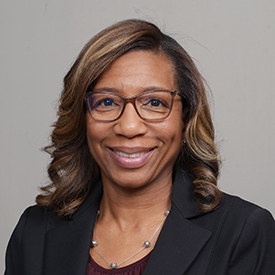
Dimetri Horner
Provost and Vice President of Academic Affairs
Harris-Stowe State University (MO)
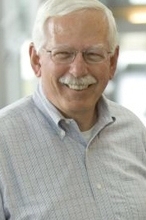
During his term, Bill Plater oversaw the development of civic engagement as an integral part of the campus mission and as a defining characteristic of its graduates, thus helping Indiana University Purdue University Indianapolis (IUPUI) win recognition among peers as a national leader. Through his writing, speaking and public advocacy, Plater also helped extend universities’ understanding of their collective responsibility as “Stewards of Place,” while connecting them with the larger regional, national and global communities of which they are also a part.
Awarded to exemplary early-career leaders who advance the wider civic engagement movement in higher education via community-campus collaboration to build a broader public culture of democracy committed to equal opportunity for all.
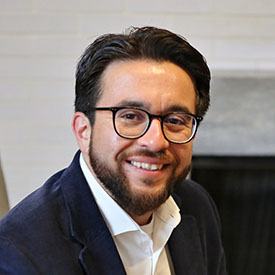
Jonathan Gomez
Assistant Professor, Department of Chicana and Chicano Studies
San Jose State University (CA)
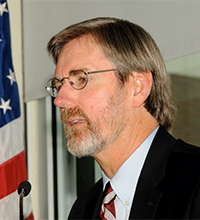
John Saltmarsh is Professor of Higher Education in the Department of Leadership in Education in the College of Education and Human Development at the University of Massachusetts, Boston. He has published widely on community engaged teaching, learning and research, and organizational change in higher education, including the co-edited book Publicly Engaged Scholars: Next Generation Engagement and the Future of Higher Education (2016), and the edited volume with Matthew Hartley, ‘To Serve a Larger Purpose:’ Engagement for Democracy and the Transformation of Higher Education (2011). He is the co-author of the “Democratic Engagement White Paper” (NERCHE, 2009) and “Full Participation” (Columbia University Law School: Center for Institutional and Social Change, 2011). From 2005-2016 he served as the Director of the New England Resource Center for Higher Education (NERCHE). From 1998-2005 he was the director of the national program on Integrating Service with Academic Study at Campus Compact.
The award was named in John Saltmarsh’s honor to recognize a long-standing passion of his: nurturing and preparing the next generation of higher education leaders (staff, faculty, or administrators) to sustain and advance the civic engagement movement. The award recognizes emerging higher education leaders whose community partnership work is grounded in reciprocity, mutual respect, shared authority, and co-creation of goals and outcomes.
Established in 2022, this award is given in recognition of exemplary leadership from staff (non-faculty, non-senior administrator) in advancing the civic learning and engagement of undergraduate students.
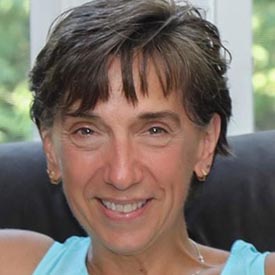
Kimberly Schmidl-Gagne
Officer of Assessment & Accreditation
Keene State College (NH)
"*" indicates required fields
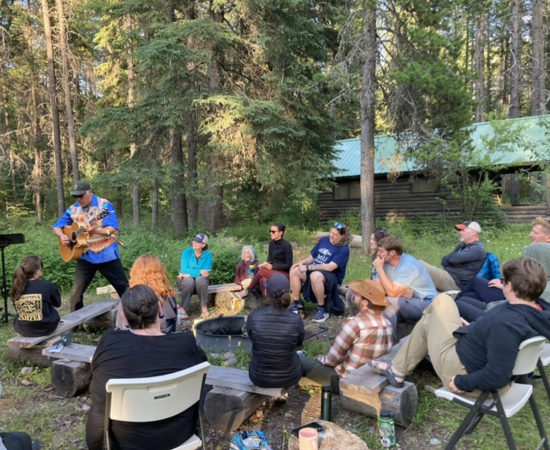
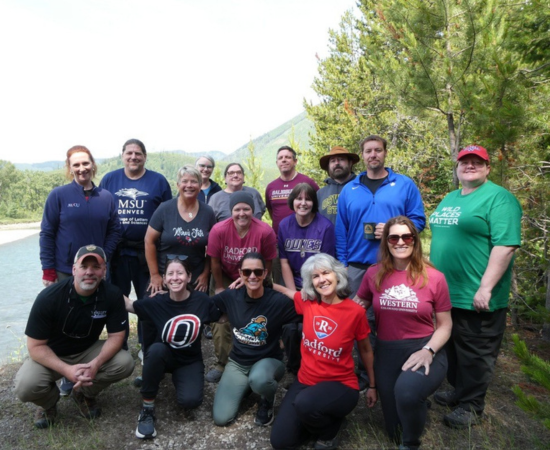
This program, held in Glacier National Park, provides interdisciplinary experiential learning and professional development for faculty, staff, and administrators by exploring issues connected to public lands. It leads to strategic intentionality in prioritizing environmental sustainability and constructive discourse on campuses.
Contact us.
Since its launch in 2004 at Yellowstone National Park, AASCU’s American Democracy Project’s Stewardship of Public Lands (SOPL) program has introduced AASCU faculty, staff, and administrators to the complexities of public land management and its connections to democracy, sustainability, and civic engagement. After a COVID-era pause, the program relaunched in 2024 at Glacier National Park, where it is held annually. We are currently accepting applications for the 2026 program which will take place June 15–19, 2026. Participants will leave with stronger civic and environmental leadership skills to apply in teaching, research, and campus programming.
The answers to these questions are not straightforward, as public lands reflect deeply held values about access, voice, and preservation that reveal the challenges and opportunities of democratic governance.
Participants will engage in interdisciplinary experiential learning during this professional development opportunity and will create a community of practitioners and collaborators. They will contribute to a compendium of their discoveries, including, but not limited to, ideas for advancing your campus sustainability and stewardship goals, supporting your own universities in sustainably managing campus public lands, and enhancing curricular and programming opportunities for students to become active stewards of place.


Participants are required to join the full in-person field experience in Glacier National Park (June 15–19, 2026), virtual meetings before and after the trip, and produce a final deliverable that demonstrates how lessons from the program are applied on campus or in the community (e.g., syllabi, experiential learning plans, resource guides, scholarly article). The application is where participants begin outlining their proposed deliverable and confirming their commitment to the program.
Applications are open to all faculty, staff, and administrators from AASCU campuses and will be reviewed by program staff beginning December 1, 2025. Reviews continue until the 18-member cohort is full or until the final deadline of January 26, 2026—whichever comes first. Because space is limited, we encourage applicants to apply early. A spot in the program is confirmed only after payment is received.
AASCU will fully refund your payment if you provide Ellen Knutson a written refund request by January 16, 2026. After that date, refunds will not be issued.
institutions integrated information about public lands or public resources onto their campuses.
participants developed resources to share their work with students.
years of participants creating their own unique programs to explore national parks with undergraduates.
Professor of Marine Biology and Chair of the Department of Natural Sciences
University of South Carolina Beaufort

Professor of Education
Eastern Washington University

Student Engagement Professional
Indiana University South Bend

Associate Professor
Tarleton State University (TX)

Professor/Department Chair
Metropolitan State University of Denver
Associate Professor of History; Chair, Environmental and Sustainability Studies Program
Worcester State University

Assistant Professor in the Department of Biological Sciences; Director of the Sam Houston State University American Democracy Project
Sam Houston State University (TX)

Assistant Director for Civic and Community Engagement
Coastal Carolina University (SC)

Professor of History
Metropolitan State University of Denver

Associate Professor, Institute for Urban Research
Morgan State University (MD)

Associate Professor
Coastal Carolina University (SC)

Outreach and Sustainability Specialist
Metropolitan State University of Denver

Associate Director for the Office of Social Impact
Towson University (MD)

Coordinator for Community Engagement
Ramapo College of New Jersey

Professor and Chair, History, Anthropology, and Modern Languages and Literatures
Eastern Washington University

Resource Management Manager
University of Hawai’i at Hilo
The 2024 SOPL compendium highlights how this cohort’s work is being implemented on AASCU’s ADP campuses through course plans, syllabi, engagement plans, research, and reflections.
See how the 2024 cohort's work is being implemented.Released in 2010, this monograph details the work of the AASCU institutions as they explore the various issues surrounding the controversies over public lands.
Read the full report.A faculty member’s story of how she implemented lessons learned from the initiative.
Read more.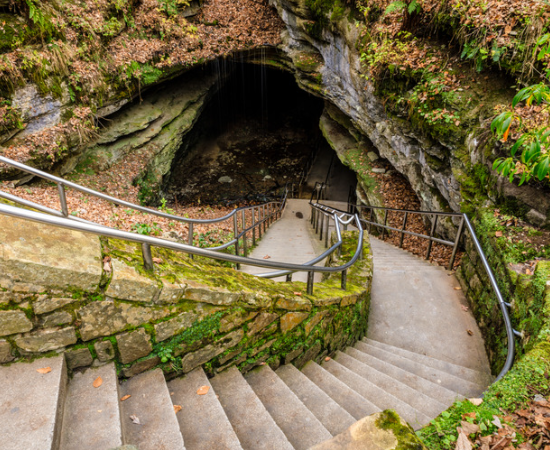
Three faculty members at Western Kentucky University created this film while they participated in the American Democracy Project’s Stewardship of Public Lands Seminar, a one-week professional development course in Yellowstone National Park. As they studied the history, science and politics of some of the major controversies in the Yellowstone ecosystem (snowmobiling, grizzly bears, and bison), they developed a team-taught course to deploy at their local national park, Mammoth Cave.
Watch video."*" indicates required fields
A cohort of senior campus leaders committed to operationalizing and sustaining civic and community engagement across their institutions.
Since 2020, ADP and Collaboratory have invited AASCU members to join cohorts and participate in meetings to connect with others to form a community of practice; in 2020 and 2021, those cohorts focused on strategies for data collection. For the 2022-2023 academic year, the program focuses on bringing small teams from each campus together to organize and collaborate on implementing an institutional vision for community engagement. As an added benefit, all teams can connect to other institutional teams to share best practices, refine their strategies, and have professional development opportunities.
published activities
community partners
course sections
involved students
hours contributed by those students
total funding for engagement and service
published activities
community partners
course sections
involved students
hours contributed by those students
total funding for engagement and service
Several years of assessments indicate that the Town Hall Meeting improves students learning of course content, changes students’ self-perception from an identification with high school notions of schooling as too often boring and meaningless to a college appropriate identification of schooling as relevant and part of students’ development as adult participants in a democracy, improves students’ civic participation, and increases students’ self-esteem.
Explore more on the institution's Collaboratory site.By considering the city’s rich history in civil rights and economic justice, as well as the even more powerful desire for civility that has impacted our ability to have deep, community-wide discussion of the area’s struggles, this program explores the different traditions of participation that drive public policy, governance, and citizen engagement.
Explore more on the institution's Collaboratory site.Students in the Gender Institute for Teaching Advocacy program work to compile a digital library including information related to various organizations throughout the state.
Explore more on the institution's Collaboratory site.Professional practice internship on voter registration, marketing, and increasing voter turnout among youth voters.
Explore more on the institution's Collaboratory site.
"*" indicates required fields
Resources and professional development equipping campus faculty to promote civil discourse and deliberative dialogue within their classrooms and across their campuses.
Participating faculty will use online resources, attend monthly online cohort meetings with faculty across the country, and present work at the Civic Learning and Democratic Engagement (CLDE) meeting in Boston in June 2023 where they demonstrate how to integrate constructive dialogues across the curriculum.
How an online educational program can reduce polarization and improve dialogue in college classrooms.
Details the randomized study, summarizes the findings, and provides recommendations for fostering mutual understanding and constructive dialogue in the classroom and on campus more broadly.
Read report.Explores three techniques for communicating and collaborating across differences: moral reframing, separating goals from strategies, and integrative thinking.
Read reportNotes how Perspectives users experienced small- to medium-sized decreases in affective polarization, small to medium-sized increases in intellectual humility (understanding the limits of one’s knowledge) and increases in sense of belonging.
Read more.Provides insights not only into debate-based course design and learning improvement strategies but also into how faculty, students, and administrators can partner between institutions to demonstrate a shared commitment to the civic mission of higher education and democratic promise of our nation.
Read more.
"*" indicates required fields
Equipping faculty and staff to support students’ fiscal thinking, advocacy experience, creative problem solving, and civic engagement experience through participation in the Up to Us Case Competition.

AASCU provides participating faculty and staff with resources and learning tools that support students in their journey to develop fiscal thinking, advocacy experience, creative problem solving, and civic engagement skills.
Faculty and staff at AASCU institutions integrated the nationwide competition into their 2023 spring semester offerings. Teams of students nationwide responded to prompts addressing the rising national debt in the context of growing climate concerns, the affordability of higher education, or rising health care costs by proposing creative yet practical solutions that consider the often competing — yet critical — aspects of the policymaking process: equitable policy development, prudent fiscal management, and long-term political feasibility. More than 30 submissions from a variety of disciplines—including but not limited to marketing, anthropology, political science, economics, social psychology, and pharmacy—showcased how students were able to use their diverse perspectives to craft innovative, thoughtful, and bipartisan policy proposals.
students engaged across 19 campuses to produce policy proposals that addressed the U.S. national debt in the context of growing climate concerns, the affordability of higher education, and rising healthcare costs.
communications of proposals were sent to members of Congress.
community members engaged in discussing the U.S. national debt through university forums and dialogues.
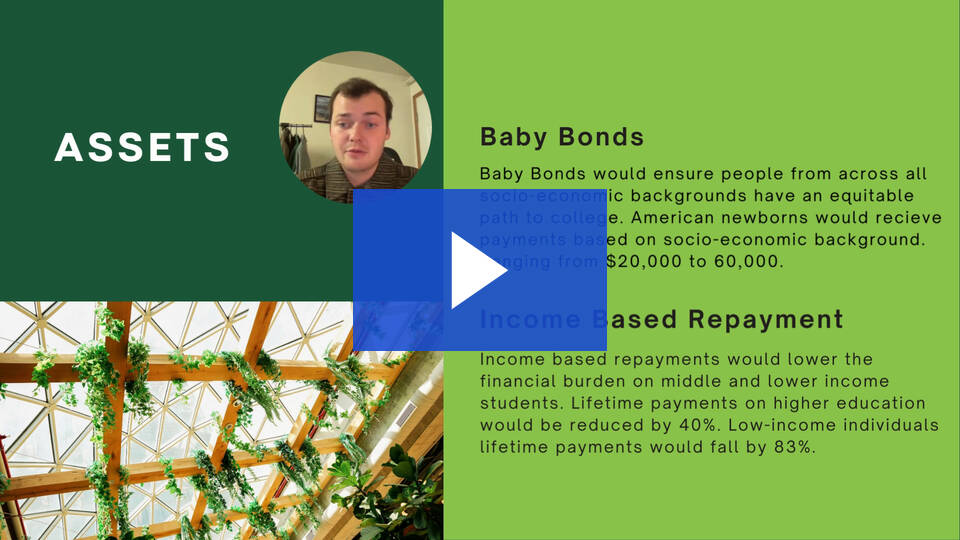
The team chose to address the rising national debt in the context of climate change. Specifically, the team tackled methane emissions from overused landfills and low recycling rates by implementing a landfill tax on businesses to increase federal revenues and incentivize more sustainable practices. Revenue from the tax would be used to fund infrastructure that relates to climate initiatives, including incineration plants and recycling centers. The revenues would also establish a Climate Innovation Fund that would help transition our society to more sustainable practices. A percentage of revenues from the tax would also be used to decrease the nation’s federal debt, which is currently more than $31 trillion. In addressing the national debt, the team aims to put the country in a better position to handle future crises and fund essential federal programs well into the future.
One-pager.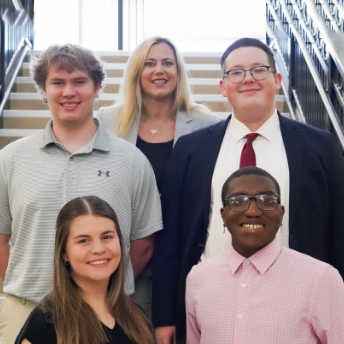


"*" indicates required fields
ADP Civic Fellows explore assessment, research, and programmatic efforts that enact and support ADP’s mission and national work during a one or two-year renewable terms.
Apply NowADP invites rolling applications for this opportunity designed to give professionals/scholars in our network a national platform to develop their research and programmatic ideas. ADP Civic Fellows will be part of a cohort experience and will work closely with our director and steering committee to design and advance ADP national initiatives.
Each Fellow is expected to provide the following information to the ADP Director:
If you are interested in joining as a team to be in the Civic Fellow program, the only modification would be that you ask one member of your team to be the Steering Committee ex officio member. All reports that you provide would be as a team and quarterly calls would ideally include the full team.

Assistant Professor, Educational Leadership
Washington State University Tri-Cities
Professor of English
Indiana University Kokomo

Assistant Professor, School of Communication
Illinois State University
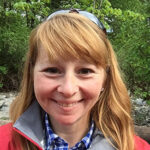
Associate Director, Madison Center for Civic Engagement and Assistant Professor, School of Communication Studies
James Madison University (VA)
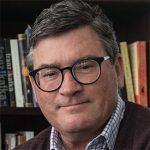
Associate Professor of Political Science
Georgia College & State University

Director of Civic Engagement and Social Responsibility
Towson University (MD)
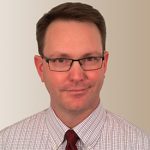
Professor and Director, School of Communication
Illinois State University
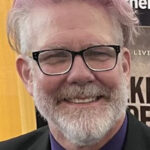
Cognitive Psychologist and Chair of the Department of Psychology
Illinois State University

Associate Professor of Political Science and MPA Program Coordinator
Valdosta State University (GA)

Coordinator of Service-Learning
Stockton University (NJ)

Professor and Chair, Political Science
Radford University (VA)

Associate Professor and Chair, Political Science
State University of New York at Oswego

Assessment & Accreditation Officer
Keene State College (NH)

Professor and Director of the Center for Applied Civic Leadership
Coastal Carolina University (SC)

Lecturer, Interdisciplinary Studies / PACE Presidential Citizen Scholars Program Coordinator
Salisbury University (MD)
This content is for GRC members only. If you are a GRC member, please click the Login button to access the content.
If your institution is already a GRC member, request your username and password information here.
Request credentials.Contact GRC to discuss membership benefits at GRCmembership@aascu.org or 202-478-7810.
Learn more.